Choosing between a freestanding bath and a built-in bath is one of the most significant decisions in any bathroom renovation. Both have genuine strengths, and neither is universally the better choice. The right answer depends on the size of your bathroom, your budget, how you use the space, and what you want the room to feel like when the renovation is complete.
This guide covers the practical differences between freestanding and built-in baths across cost, cleaning, space requirements, plumbing, resale value, and design impact. By the end, you will have a clear framework for making the decision that suits your bathroom and your household.
What Is the Difference Between a Freestanding and a Built-In Bath?
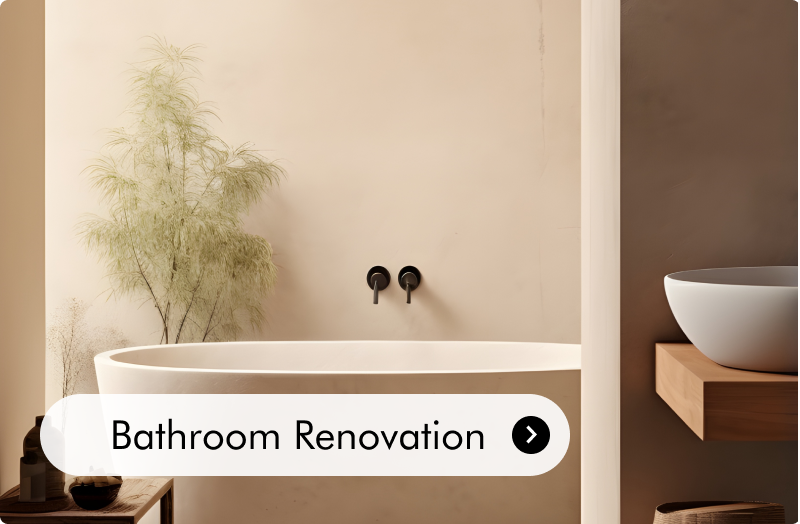
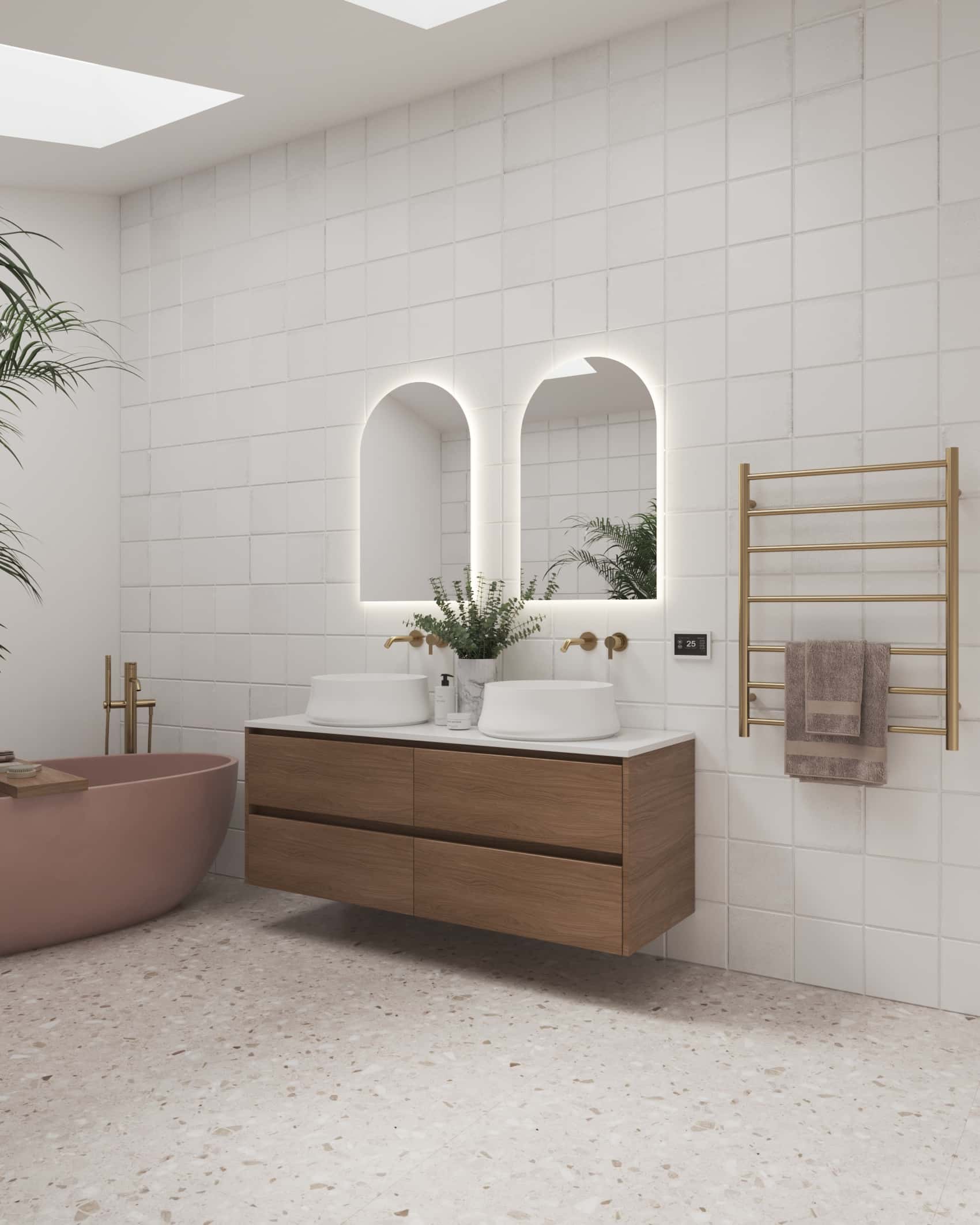
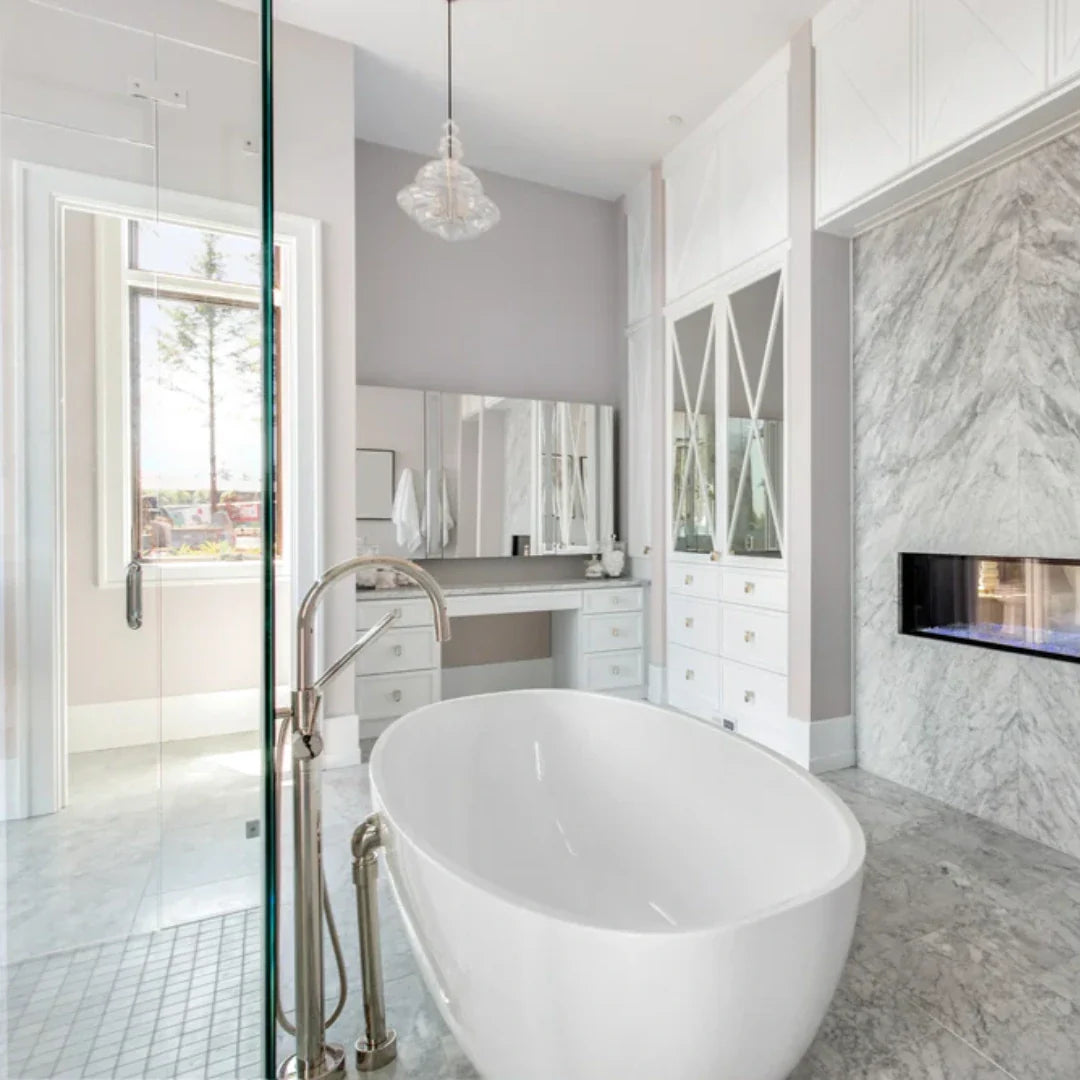
A freestanding bath is a self-contained unit that stands independently on the floor. The entire exterior of the bath is finished and visible, and the bath is not enclosed by any wall, tile surround, or panel. Tapware is typically supplied through the floor, a wall behind the bath, or a dedicated floor-mounted bath filler.
A built-in bath is set into a tiled or panelled surround, with one or more sides enclosed by the bathroom structure. The most common configuration is an alcove bath, where the bath sits between three walls with the open side accessible from the bathroom. Built-in baths can also be corner-mounted or set into a freestanding deck or platform.
Both styles are fully functional for bathing. The differences between them sit in aesthetics, practicality, cost, and suitability for different bathroom sizes and layouts.
Side-by-Side Comparison
The table below compares freestanding and built-in baths across the factors that matter most to Melbourne homeowners planning a bathroom renovation.
|
Factor |
Freestanding bath |
Built-in bath |
|
Cost (bath only) |
$800 to $5,000+ |
$400 to $2,500+ |
|
Installation cost |
Lower (no surround needed) |
Higher (tiling or panelling required) |
|
Cleaning |
Harder (all sides exposed, floor underneath) |
Easier (enclosed sides, no floor gap) |
|
Space required |
More (access needed on all sides) |
Less (fits into corner or alcove) |
|
Design impact |
High (focal point of the room) |
Moderate (part of the overall design) |
|
Tap/filler position |
Floor-mounted, wall-mounted, or over-bath |
Wall-mounted or deck-mounted on surround |
|
Suitability for small bathrooms |
Limited (needs circulation space) |
Good (maximises floor space) |
|
Resale value impact |
High in mid to upper market |
Neutral to moderate |
|
Plumbing complexity |
Moderate (floor waste required) |
Standard (wall or floor waste) |
|
Typical lifespan |
20 to 30+ years |
15 to 25+ years |
Cost: What You Actually Pay for Each Option
The purchase price of the bath itself is only part of the cost equation. Installation costs differ significantly between the two styles, and this is where freestanding baths often close the gap with their higher purchase price.
Freestanding bath costs
Entry-level freestanding baths in acrylic start from around $800 to $1,500. Mid-range freestanding baths in stone resin or composite materials, which offer better heat retention and a more premium feel, typically cost $1,500 to $3,500. High-end stone or cast iron freestanding baths start from $3,500 and can reach $8,000 to $15,000 for custom or designer pieces.
Installation is relatively straightforward: the bath is positioned, plumbing is connected to the floor waste and the chosen tapware configuration, and no tiling or surround work is required. This keeps installation costs lower than most homeowners expect, typically $400 to $800 for the plumbing connection.
Built-in bath costs
Built-in baths are generally less expensive to purchase than their freestanding counterparts. A standard acrylic built-in bath costs $400 to $1,200, with mid-range options in cast iron or premium acrylic reaching $1,200 to $2,500.
However, installation costs are higher because a built-in bath requires a tiled surround or panelled enclosure. Tiling the three walls of an alcove bath adds $800 to $2,500 depending on the tile choice, and a tiled bath deck or platform adds further. When the full cost of bath plus surround is totalled, the gap between freestanding and built-in narrows considerably for mid-range selections.
Space: The Most Important Practical Consideration
Space is often the deciding factor for Melbourne homeowners, and for good reason. The average Melbourne bathroom is not large, and a freestanding bath requires more usable floor space than a built-in alternative.
Minimum space for a freestanding bath
To install a freestanding bath comfortably, you need the bath itself plus at least 600mm of clear floor space on the two long sides and at least 400mm at each end. For a standard 1500mm freestanding bath, this means a minimum bathroom dimension of approximately 2700mm in the bath's length direction and 1800mm in its width direction, just for the bath zone alone.
In practice, most freestanding baths work well in bathrooms of 3.5 square metres or more where the bath is the primary feature. In smaller bathrooms, fitting both a freestanding bath and a shower, vanity, and toilet becomes a significant layout challenge.
Built-in bath space efficiency
A built-in alcove bath makes much more efficient use of floor space. It sits flush against three walls and the open side aligns with the bathroom floor, leaving the remaining floor area clear for other fixtures. A 1500mm built-in bath can fit comfortably in a bathroom where a freestanding bath would feel cramped.
For bathrooms under 5 square metres, a built-in bath is almost always the more practical choice if a bath is wanted at all. Above 8 square metres, a freestanding bath becomes viable without compromising the rest of the layout.
Cleaning: The Practical Reality
The cleaning requirements of each bath type are a genuine lifestyle consideration that many homeowners overlook during the renovation planning stage.
Cleaning a freestanding bath
The appeal of a freestanding bath is partly its sculptural quality: a self-contained form sitting in the room. The practical implication is that all sides of the bath are exposed, and the floor underneath and around the bath must also be cleaned regularly. In households with young children or pets, the gap between the base of the bath and the floor accumulates dust, hair, and moisture and requires regular attention.
The exterior of the bath, particularly the underside, is also harder to reach for cleaning than the interior surfaces of a built-in bath. This is a minor consideration for most households but worth factoring in if ease of cleaning is a priority.
Cleaning a built-in bath
A built-in bath with a tiled surround has no exposed sides or floor gap to clean. The surfaces are straightforward: the interior of the bath and the tiled walls of the surround. Grout lines in the surround tiles require periodic maintenance, but the overall cleaning regime is simpler and faster than a freestanding bath.

Design and Resale Value
From a design perspective, freestanding baths carry a stronger visual impact. They read as a focal point in the room and are strongly associated with luxury bathroom design in the Melbourne market. In mid to upper price point properties, a well-chosen freestanding bath in a thoughtfully designed bathroom can contribute meaningfully to property appeal and resale value.
Built-in baths are more neutral in their design contribution. A well-tiled built-in bath in an alcove looks clean and considered, but it does not carry the same immediate premium impression as a freestanding bath. This is not a disadvantage in all markets. In family-oriented suburbs and for buyers who prioritise practicality over aesthetics, a built-in bath may actually be preferred.
The key insight for Melbourne homeowners is that the resale value impact of a freestanding bath depends on the rest of the renovation and the price point of the property. A freestanding bath in a poorly renovated bathroom adds little value. A freestanding bath as the centrepiece of a thoroughly considered luxury bathroom renovation adds genuine appeal.
Tapware and Plumbing Considerations
The tapware and plumbing configuration differs between the two bath types and affects both the cost and the visual outcome of the renovation.
Freestanding bath tapware
Freestanding baths are most commonly paired with a floor-mounted bath filler, a tall tapware piece that rises from the floor beside the bath. This requires a floor waste in the correct position and plumbing routed through the floor slab or subfloor, which adds to the installation complexity and cost compared to wall-mounted tapware. Wall-mounted bath fillers are an alternative where the wall behind the bath is accessible, and some freestanding baths also accept over-bath tapware mounted on the bath rim.
Floor-mounted bath fillers in quality finishes are a significant purchase in themselves, typically $400 to $1,500 for mid-range options and $1,500 to $4,000 for premium pieces. Budget for the tapware separately from the bath when comparing costs.
Built-in bath tapware
Built-in baths use wall-mounted tapware in most configurations, which is simpler and less expensive to install than floor-mounted alternatives. Deck-mounted tapware on the bath surround is also an option where the surround design allows for it. A quality wall-mounted bath mixer with spout typically costs $300 to $1,000, making tapware costs lower overall for built-in installations.
Which Bath Is Right for Your Bathroom?
There is no single right answer, but the following decision framework covers the most common scenarios:
- Choose a freestanding bath if your bathroom is 8 square metres or larger, design impact and resale value are priorities, and you are prepared for slightly more involved cleaning and a higher tapware cost.
- Choose a built-in bath if your bathroom is under 6 square metres, you are renovating a family bathroom where practicality and ease of cleaning matter more than statement design, or your budget is tight and you want to allocate more spend to other aspects of the renovation.
- For bathrooms between 6 and 8 square metres, the decision comes down to whether the bath is the primary feature of the room or one element among several. A skilled designer can make either option work well in this size range.
Viewing Baths in Person Before You Decide
One of the most useful steps in choosing between a freestanding and built-in bath is seeing both options at the same scale in a showroom. Online photography of freestanding baths in particular can be misleading about size and proportion, as baths are almost always photographed in large, professionally styled spaces.
At APD Design, our Nunawading showroom stocks a range of bathtubs across both styles including freestanding options in acrylic, stone resin, and composite materials. Our team can advise on sizing for your specific bathroom dimensions and help you understand how different tapware configurations will look and work in your space. Visit us at Unit 64, 31-37 Norcal Road, Nunawading, Monday to Friday, or call 03 9034 6490 to arrange a consultation.