
A bathroom works harder than almost any other room in the house, and it shows the wear first. Dated tiles, tired fixtures and a layout that no longer suits a growing family are the most common reasons Melbourne homeowners start planning a bathroom renovation, whether that is a period terrace in Fitzroy, a family home in Glen Waverley, or an apartment ensuite in Port Melbourne.
Bathrooms are also, square metre for square metre, the most technically demanding room in a home to renovate. Waterproofing, plumbing and drainage all have to be right the first time, and Victoria's compliance requirements are among the strictest in the country. This guide covers what a bathroom renovation costs in Melbourne right now, the compliance rules that are genuinely not optional, the design styles shaping bathrooms in 2026, how the brief changes between a family bathroom, an ensuite and a powder room, and how to choose the right renovator.
Renovation or Remodel: Get This Straight First

The terms get used interchangeably, but they describe different projects with very different budgets. A renovation keeps the existing layout and updates fixtures, tiles and finishes within it, generally without needing a building permit. A remodel changes the structure itself, moving the shower, relocating the toilet, or expanding the room's footprint, and it almost always requires a building permit under the Building Act 1993.
The cost difference is where this really matters. Keeping fixtures in their existing positions is the single most effective way to control a bathroom budget, since relocating a toilet, shower or vanity typically adds $2,000 to $6,000 in plumbing work, and more again on a concrete slab where the floor needs cutting. Deciding early whether your layout genuinely needs to change, or just its finishes, is the first real decision of the project.
Read the full guide: Bathroom Renovation vs Bathroom Remodel: What Is the Difference?
What a Bathroom Renovation Costs in Melbourne in 2026
The Housing Industry Association puts the average Australian bathroom renovation at around $26,000, and advertised prices across the Melbourne market range from under $10,000 to well beyond $60,000. That spread is confusing until you understand what sits behind it: at the low end, the savings almost always come from the places a bathroom genuinely cannot afford them, thinner waterproofing, unlicensed labour, and fixtures that fail early. Rectifying a failed waterproofing job typically costs $15,000 to $30,000, because it means stripping the finished room back to the membrane, which is why a cheap bathroom quote is so often the most expensive decision in the project.
A bathroom renovation done properly, with certified waterproofing to AS 3740, licensed and certified trades at every stage, quality fixtures throughout and a design led process, generally starts from around $30,000 in Melbourne today. Most of our bathroom projects at APD Design fall between $30,000 and $49,000, covering a full strip out and rebuild with quality tiling, fixtures and compliant trade work throughout. Projects between $50,000 and $80,000 step up to premium ensuites, custom joinery, stone finishes, underfloor heating and layout changes.
If you are not yet sure where your bathroom sits, that is completely normal, and a free consultation settles it quickly. A short conversation about the room, its condition and your priorities gives you a far more reliable number than any general guide.
Wherever the project lands, the cost structure is consistent. Labour takes a larger share of a bathroom budget than most people expect, typically 40 to 50 percent, because a single small room needs a builder, plumber, electrician, waterproofer and tiler in sequence, each licensed and certified. That is also why a very small bathroom does not cost proportionally less: the compliance and trade base cost is largely fixed regardless of floor area.
How Long It Takes
A standard bathroom renovation keeping the existing layout typically takes two to four weeks on site. A remodel involving plumbing relocation or structural changes generally runs four to six weeks, and complex projects or new ensuites can extend to eight weeks or more. Waterproofing adds unavoidable waiting time within any schedule, since the membrane must cure properly before tiling can start, and Melbourne's cold, damp winters can stretch curing times, which is exactly the kind of delay a good renovator plans around rather than discovers.
The Non Negotiables: Waterproofing, Permits and Licensed Trades
Everything else in this guide is a choice. This section is not. All wet areas in a bathroom renovation must be waterproofed to Australian Standard AS 3740, and in Victoria this work sits within some of the country's strictest compliance settings, overseen by the Victorian Building Authority. The junction between the shower and the surrounding floor and walls is the single most critical point in the room, and it matters even more in older Melbourne homes built before the current standard existed, and in apartments, where a failure can damage the unit below as well as your own.
All plumbing and electrical work must be performed by licensed trades and certified, through a Certificate of Compliance for plumbing and a Certificate of Electrical Safety for electrical work, regardless of whether the broader project needs a permit. Most cosmetic renovations within the existing layout do not require a building permit, while structural changes, fixture relocation into new positions and new ensuites generally do. Keep every certificate: they matter for insurance, and buyers' inspectors increasingly ask for them at sale time.
Read the full guide: What Is Waterproofing in a Bathroom Renovation and Why Does It Matter in Melbourne?
Older Melbourne Homes: What Might Be Hiding Behind the Tiles
In pre 1990 homes across Melbourne's inner north, west and south east, it is common for demolition to reveal issues no quote could see in advance: rotting subfloor timber, original clay drainage pipes, compromised or entirely absent waterproofing, and in some homes asbestos sheeting behind the wall tiles, which requires licensed removal and can add $5,000 or more on its own. None of this means an older bathroom should not be renovated, only that the budget should carry a genuine contingency of 10 to 15 percent, and that a renovator experienced with older Melbourne housing will price and plan for these possibilities honestly rather than pretending they do not exist.
On the other side of the ledger, the return is real. A well executed bathroom renovation typically returns 60 to 80 percent of its cost in added property value, and in Melbourne's competitive inner and eastern suburbs an updated bathroom is often the difference between a fast sale at asking price and a listing that lingers.
Bathroom Design Styles Defining Melbourne in 2026

Bathroom design has moved decisively away from the all white, all chrome room of the last decade. These are the styles shaping Melbourne bathrooms right now:
- Spa and wellness led: The defining direction of 2026. Warm, earthy tones, natural stone and timber textures, rainfall showers, heated towel rails and underfloor heating, designed to make an ordinary weekday feel like a reset. Features that were strictly luxury five years ago now appear in mid range renovations.
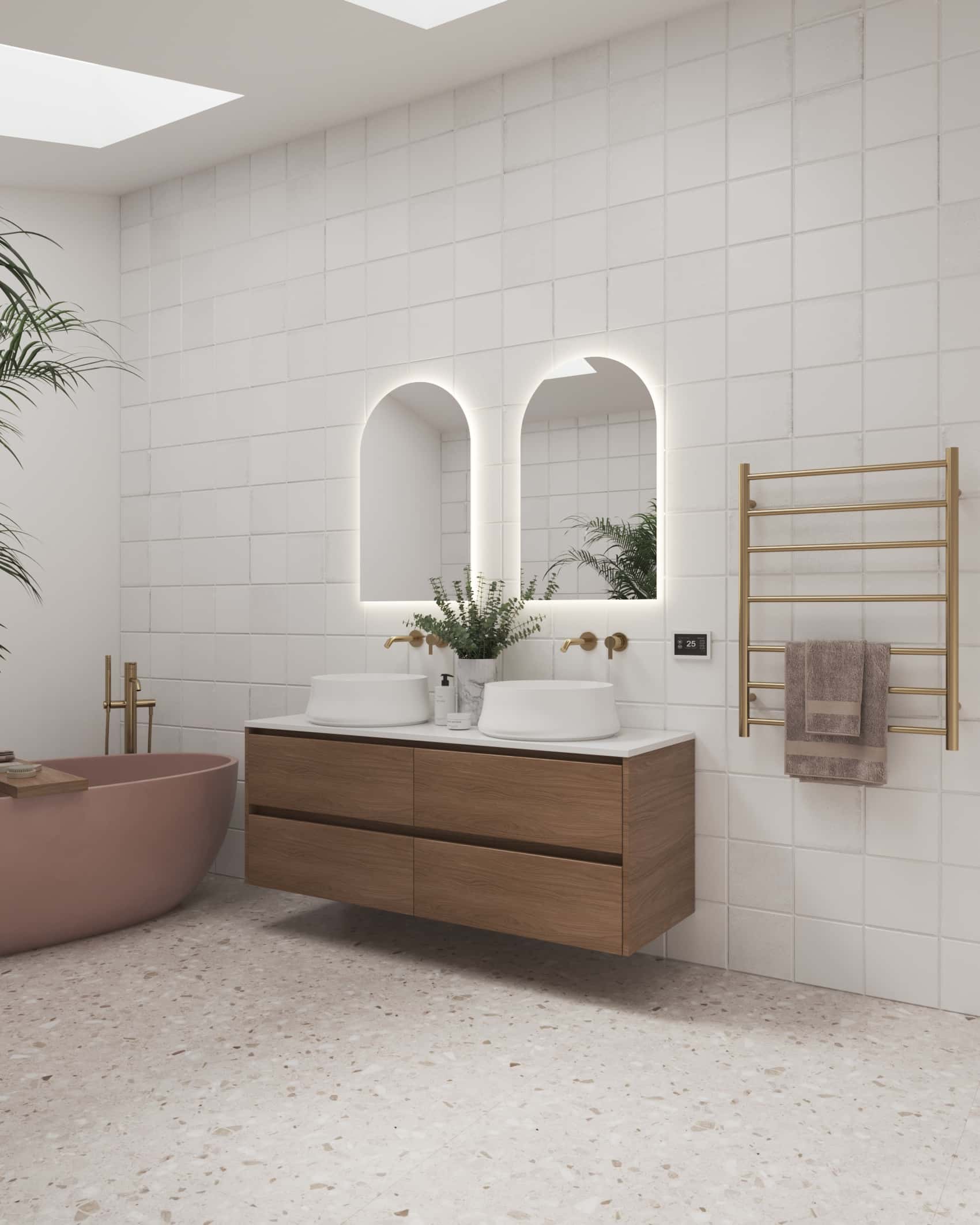
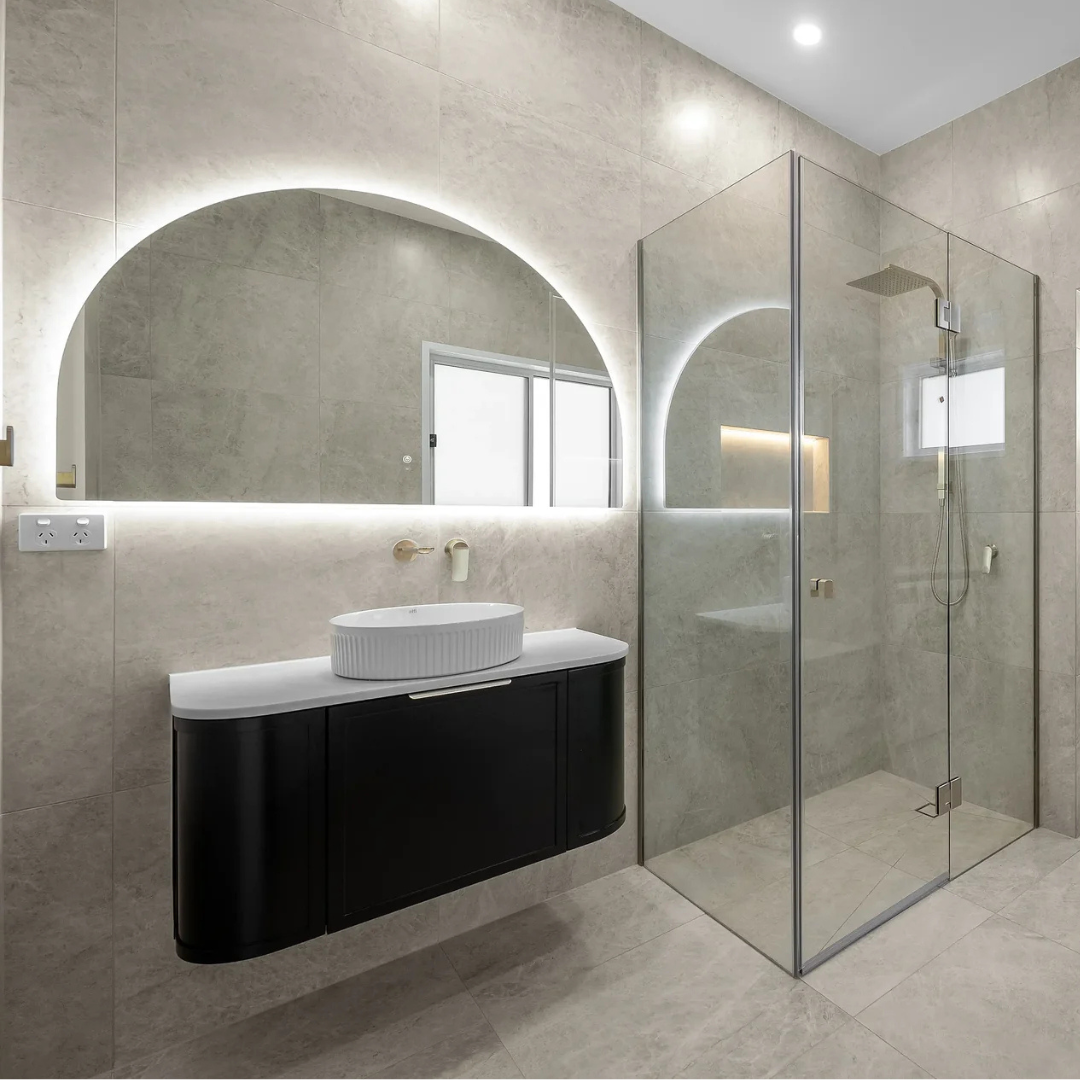
- Soft contemporary: Warm neutrals like greige, putty and mushroom paired with clean detailing, curved mirrors and brushed metal hardware. Calm, current and the safest style bet for the next decade.
- Luxury modern: Double vanities, walk in showers, layered lighting and statement stone. The 2026 version pairs large format, minimal grout tiles with one striking veined marble feature rather than pattern everywhere.
- Japandi: The meeting point of Japanese restraint and Scandinavian warmth: light timber, matte finishes, uncluttered lines and considered storage. Particularly suited to smaller bathrooms where visual calm makes the room feel bigger.
- Heritage and period: For Melbourne's Victorian and Edwardian homes, a renovated bathroom that honours the era: freestanding baths, framed shower screens, classic profiles and traditional tapware silhouettes, executed with modern waterproofing and plumbing underneath.
- Coastal and Hamptons: Soft whites, light timber, shaker style vanities and relaxed detailing. It remains popular across Melbourne's family suburbs for the same reason as in kitchens: it is elegant without being precious.
- Colour drenched and expressive: The bold end of 2026: a single earthy or deep tone wrapped across walls, floor and sometimes ceiling, creating an immersive, cocooned feel. Powerful in powder rooms, where a daring choice delights guests without dominating daily life.
Style should be locked in before fixtures are chosen, since the same vanity or tapware finish reads completely differently inside different styles.
The Trends Running Through All of Them
Across every style above, a few 2026 currents repeat. Warm neutrals have decisively replaced crisp white as the default palette, with putty, mushroom, greige and taupe leading, deepened by earthy accents in terracotta, olive and moss. Curves are softening the room's hard geometry through arched mirrors, rounded vanity corners and sculptural freestanding baths, which themselves have evolved toward softer oval shapes with smaller footprints better suited to Melbourne bathrooms and apartments.
Tiles have gone large: 600 by 1200mm formats and slab style porcelain reduce grout lines, clean up the look and quietly reduce long term waterproofing failure points. In metals, brushed brass, warm gold and champagne finishes lead the tapware market, matte black remains strong, and the smartest rule is the simplest: keep to one metal finish through the whole room, or two from the same tonal family at most. Timber warmth runs throughout, in vanities, timber look porcelain floors and framed mirrors, and layered lighting, from halo mirrors to soft LED wash lighting, is doing as much for the feel of a finished bathroom as any tile choice.
Family Bathroom, Ensuite or Powder Room: The Brief Changes
A family bathroom is a workhorse. It rewards durable, easy clean surfaces, generous storage with a drawer vanity, a bath if children are in the picture, and a full width heated towel rail so several towels can dry properly at once. Slip resistance underfoot matters more here than anywhere else in the house.
An ensuite is a private retreat, and it is where the spa and wellness trend lands hardest: a walk in shower with rainfall and handheld heads, a double vanity where the width allows, softer layered lighting and warmer finishes. Because it serves one or two adults rather than the whole household, an ensuite can carry more personality and more premium finishes per square metre than the family bathroom.
A powder room is the smallest room in the house and the one guests see most, which makes it the perfect place for the boldest choice in your home: a colour drenched wall, a sculptural basin, a striking mirror. With no shower or bath, there is no steam and far less wear, so finishes that would be impractical elsewhere work beautifully here.
Small bathrooms of every kind reward the same core moves: a wall hung vanity that shows the floor running underneath, a wall hung toilet, a full width mirror and large format tiles, together making a compact room read considerably larger than its actual footprint.
Wherever the room sits in the house, drawer vanities have become the most requested storage upgrade across Melbourne renovations, offering full visibility and easy access compared with cupboard doors, often paired with a recessed mirrored shaving cabinet so everyday clutter disappears without sacrificing bench space. As a budgeting rule of thumb, fixtures and fittings together, the vanity, tapware, toilet, shower screen and bath where fitted, typically account for around a third of the total project, so a fixture wish list is worth pricing early rather than after the tiling budget is already committed.
Choosing the Right Bathroom Renovator

Because bathrooms are so technical, the renovator matters more here than almost anywhere else in the house. Ask for their VBA registration, proof of insurance, and compliance certificates from recent jobs, and pay attention to how they answer detailed questions about waterproofing method and drainage falls. A renovator who answers precisely and patiently is showing you how the whole project will run. Prefer fixed price, itemised quotes over lump sums or cost plus arrangements, so the budget is protected and every inclusion is visible before work begins.
Read the full guide: 27 Essential Questions to Ask Bathroom Renovators in Melbourne
Common Bathroom Renovation Mistakes to Avoid
- Treating waterproofing as a place to save money rather than the most important line in the budget.
- Relocating fixtures for preference rather than genuine need, and paying thousands in plumbing for the difference.
- Choosing a trend heavy design that photographs beautifully but is difficult to keep clean day to day.
- Mixing three or more metal finishes in one room, the fastest way to make a new renovation feel chaotic.
- Leaving fixture decisions to the final weeks after spending all the planning time on tiles and colour.
- Accepting a lump sum quote with no itemisation and discovering the exclusions mid project.
Frequently Asked Questions
Q. How much does a bathroom renovation cost in Melbourne in 2026?
The national average sits around $26,000 per the HIA, though a renovation done properly, with certified waterproofing and licensed trades throughout, generally starts from around $30,000 in Melbourne. Most of our projects fall between $30,000 and $49,000, with premium ensuites and remodels running $50,000 to $80,000. A free consultation is the fastest way to place your own project.
Q. How long does a bathroom renovation take?
A standard renovation takes two to four weeks on site. Remodels with plumbing or structural changes run four to six weeks or longer.
Q. Do I need a permit to renovate my bathroom in Victoria?
Most cosmetic renovations within the existing layout do not need a permit. Structural changes, fixture relocation and new ensuites generally do, and all plumbing and electrical work must be certified regardless.
Q. What is the difference between a renovation and a remodel?
A renovation updates finishes within the existing layout. A remodel changes the structure or moves fixtures, which adds permit requirements and significant plumbing cost.
Q. What bathroom style is most popular in Melbourne right now?
Spa and wellness led design leads 2026, alongside soft contemporary warm neutral palettes. Brushed brass and warm metallics have overtaken chrome as the leading tapware finishes.
Q. Why do small bathrooms still cost so much to renovate?
Because licensed plumbing, electrical and waterproofing requirements create a fixed base cost regardless of floor area, and labour typically takes 40 to 50 percent of any bathroom budget.
Q. Can a small bathroom feel spacious after renovation?
Yes. A wall hung vanity, wall hung toilet, full width mirror and large format tiles together make a compact bathroom read considerably larger than its footprint.
Start Planning Your Bathroom Renovation
Ready to start planning your bathroom renovation? Visit our showroom at Unit 64, 31 to 37 Norcal Road, Nunawading, call our team on 03 9034 6490, or book a free consultation.


Leave a comment
This site is protected by hCaptcha and the hCaptcha Privacy Policy and Terms of Service apply.