

The kitchen is the busiest room in almost every Melbourne home, and it shows the wear first. Cabinetry that looked current a decade ago now reads as dated, a layout designed around one cook no longer suits a family that gathers around an island bench, and appliances that once felt modern are simply old. It is no surprise that kitchen renovations remain one of the most requested home improvement projects across Melbourne, from period homes in Hawthorn and Kew to newer townhouses around Doncaster and Glen Waverley.
This guide is written for anyone at the very start of that journey. It walks through what a kitchen renovation actually costs in Melbourne right now, how long it really takes, the layouts and design styles shaping kitchens in 2026, the material changes every homeowner should know about, the permit rules that catch people out, and how to choose a renovation partner you can trust.
What a Kitchen Renovation Costs in Melbourne in 2026

Industry data from the Housing Industry Association puts the average Australian kitchen renovation between $22,000 and $40,000, and the wider Melbourne market spans everything from flatpack refreshes to six figure custom projects. Those market numbers are useful context, but what matters more is what a renovation done properly actually involves at each level.
A full kitchen renovation of lasting quality, with new cabinetry throughout, a compliant trade team and a design led process, generally starts from around $30,000 in Melbourne today. Most of our projects at APD Design fall between $30,000 and $49,000, which covers a complete renovation with quality cabinetry, a stone look benchtop and updated appliances within the existing footprint. Projects between $50,000 and $80,000 step up to custom cabinetry, premium porcelain or zero silica stone, layout changes and higher end appliances, and renovations beyond $80,000 typically involve structural work or fully bespoke joinery throughout.
If you are not sure where your project lands, that is entirely normal at the start, and it is exactly what a free consultation is for. A short conversation about your space and priorities settles the budget question far more reliably than any general guide can.
Wherever your project sits, the cost structure underneath is consistent. Cabinetry is the largest single cost, typically taking 30 to 40 percent of the total budget, which is exactly why cabinet decisions deserve the most care. Benchtops generally account for a further 15 to 25 percent, trades and installation another 15 to 25 percent, and appliances 10 to 20 percent depending on specification. The biggest lever after that is whether the existing footprint is reused. Keeping the sink, cooktop and dishwasher in their current positions is the single most effective way to control costs, since relocating plumbing on a concrete slab alone can add $3,500 to $8,000 before any other work begins.
One change every Melbourne homeowner should know about: the national ban on high silica engineered stone took effect on 1 July 2024, and Victoria applied it immediately with no transition period. Zero silica engineered stone and porcelain have become the new benchtop standard, and a comparable benchtop now typically costs $500 to $2,000 more than the same specification quoted before mid 2024. If you are working from an older quote or a friend's renovation budget from a few years ago, this is one line item that has genuinely moved.
How Long a Kitchen Renovation Really Takes
Most kitchen renovations in Melbourne take between four and eight weeks on site, from the start of demolition to the final walkthrough. A cosmetic refresh sits at the faster end, while a full renovation with layout changes sits toward the slower end.
The bigger scheduling factor in 2026 is what happens before the build starts. Cabinetry lead times are currently the most common constraint on kitchen renovation schedules, with custom and semi custom joinery often booked out weeks ahead, so the full project, from first design conversation to finished kitchen, usually runs closer to three to four months. Locking in your cabinetry decisions early is the most effective thing you can do to keep the overall timeline tight, and it is worth planning for a period without a functioning kitchen during the installation weeks.
The Renovation Process, Step by Step
A good kitchen renovation follows a clear sequence. It begins with consultation and planning, where a designer works through how you actually use your kitchen, your budget and your style preferences, and translates that into a floor plan built around your household rather than a generic template. Design and 3D rendering follows, letting you see the finished kitchen before a single cabinet is ordered, so changes happen on screen rather than on site.
Appliances deserve a decision early in this stage rather than at the end, since cabinetry is built around exact appliance dimensions and an integrated dishwasher or a wider oven cannot simply be swapped in later. Deciding whether you are keeping existing appliances, upgrading to mid range, or investing in a premium package also settles a large slice of the budget in one conversation.
Material selection comes next, choosing benchtops, cabinetry finishes, splashbacks and hardware together so the whole space reads as considered rather than assembled piece by piece. The build itself then runs in a strict order: demolition, plumbing and electrical rough in, cabinetry installation, benchtop templating and fitting, splashback, appliance installation and finishing trades. A final walkthrough checks every door alignment, drawer runner and appliance function against the original design before sign off.
How Your Suburb and Home's Era Change the Numbers
Melbourne's sprawl means renovation pricing is genuinely local. Inner city projects typically cost 15 to 25 percent more than equivalent outer suburban work, driven by higher trade demand, restricted vehicle access and the character of the housing stock itself. A Victorian or Edwardian terrace in Fitzroy, Richmond or Carlton often brings narrow kitchens, lath and plaster walls, non compliant original plumbing and heritage overlay restrictions, all of which add cost and lead time before a single cabinet is discussed.
Melbourne does hold one genuine advantage: the city's strong cabinet manufacturing base through the south east industrial corridor means custom cabinetry is often achievable at semi custom prices, which is part of why Melbourne kitchen pricing generally sits 5 to 15 percent below equivalent Sydney projects. A renovator with real local supplier relationships passes that advantage on to you.
Choosing the Right Layout

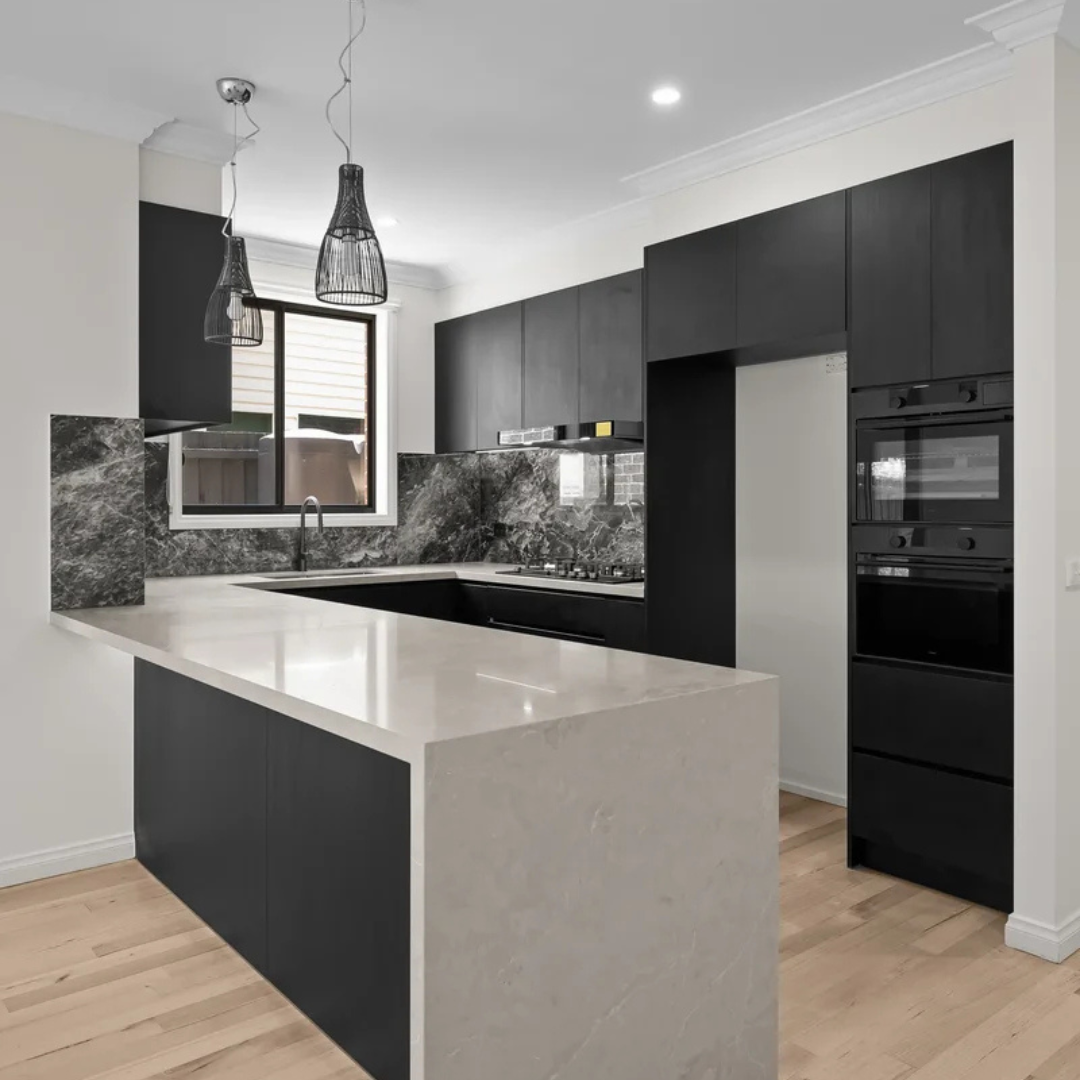
The layout affects how a kitchen feels to use every single day, more than any finish or fixture. Galley kitchens, with two parallel benches, make efficient use of the narrow footprints common in Melbourne's period homes, provided the walkway between benches is a genuine 1200mm or more. L shaped kitchens free up floor space for dining and are the most adaptable layout across the city's varied housing stock. U shaped kitchens offer the most bench and storage space and reward larger rooms, while island kitchens create the natural gathering point most families now want, but need roughly 3.6 metres or more of room width to breathe properly. A peninsula delivers much of the island's social openness in rooms that cannot quite fit one, since it only needs clearance on three sides.
Alongside the main layout, butler's pantries and sculleries have moved from luxury extra to mainstream request in Melbourne, giving a second prep and storage zone that keeps the main kitchen clear for daily life and entertaining.
Kitchen Design Styles Defining Melbourne in 2026
Style is where most homeowners start dreaming, so it is worth knowing the field properly. These are the kitchen styles shaping Melbourne renovations right now:
- Modern farmhouse: The style of the moment in Australia, pairing shaker profile cabinetry with warm timber tones, stone look benchtops and brushed metal hardware. It reads as relaxed and lived in rather than showroom perfect, which is exactly why it has taken over.
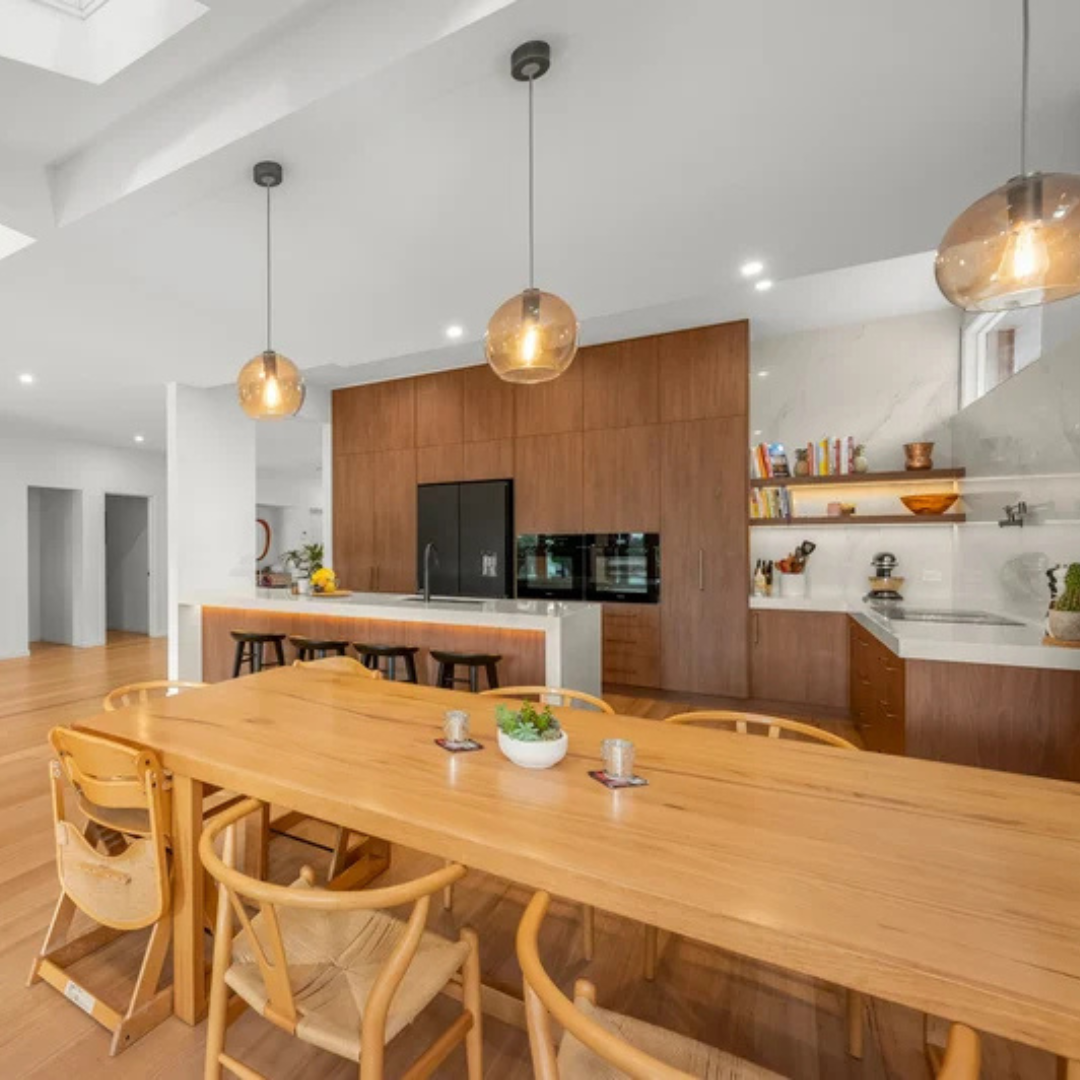
- Warm contemporary: The evolution of the modern kitchen for 2026, swapping crisp white and high gloss for timber grain cabinetry, matte surfaces, curved island ends and earthy neutrals like mushroom, taupe and sage. Warm timber has genuinely overtaken white as the most requested cabinetry direction.
- Shaker and classic: Shaker profile doors remain Australia's most popular single cabinetry choice because they sit comfortably between traditional and modern. In Melbourne's Victorian and Edwardian homes, a classic kitchen with slimmer, refined shaker profiles feels like a natural extension of the home's original character.
- Hamptons: Still a Melbourne favourite for its relaxed coastal elegance, though the 2026 version is more restrained: slimmer door profiles, softer whites and warm brass accents rather than the bolder, heavier Hamptons look of a few years ago.
- Minimalist: Handleless push to open cabinetry, fully integrated appliances and a pared back palette. The 2026 take is warmer than the clinical minimalism of the past decade, often anchored by one natural timber or stone feature.
- White and timeless: The classic white kitchen has not disappeared, but it has warmed up. Soft whites, alabaster and warm creams have replaced stark bright white, and they remain the safest resale choice across almost every Melbourne suburb.
- Industrial: Suited to warehouse conversions and inner city apartments, built around darker cabinetry, concrete look surfaces and black or gunmetal hardware. Best used with warm timber or brass touches so the space stays inviting rather than harsh.
Whichever style you lean toward, choose it before finalising materials rather than after, since the same benchtop or hardware finish reads completely differently across different styles.
Materials, Colours and Finishes Trending Now

The clearest shift in 2026 is warmth. Cool whites and greys have given way to organic palettes: soft whites, mushroom, taupe, clay and muted greens, often paired with timber cabinetry that shows genuine visible grain. Matte finishes have largely replaced high gloss, and texture is doing more work than colour, through fluted cabinetry panels, textured stone look surfaces and layered natural materials.
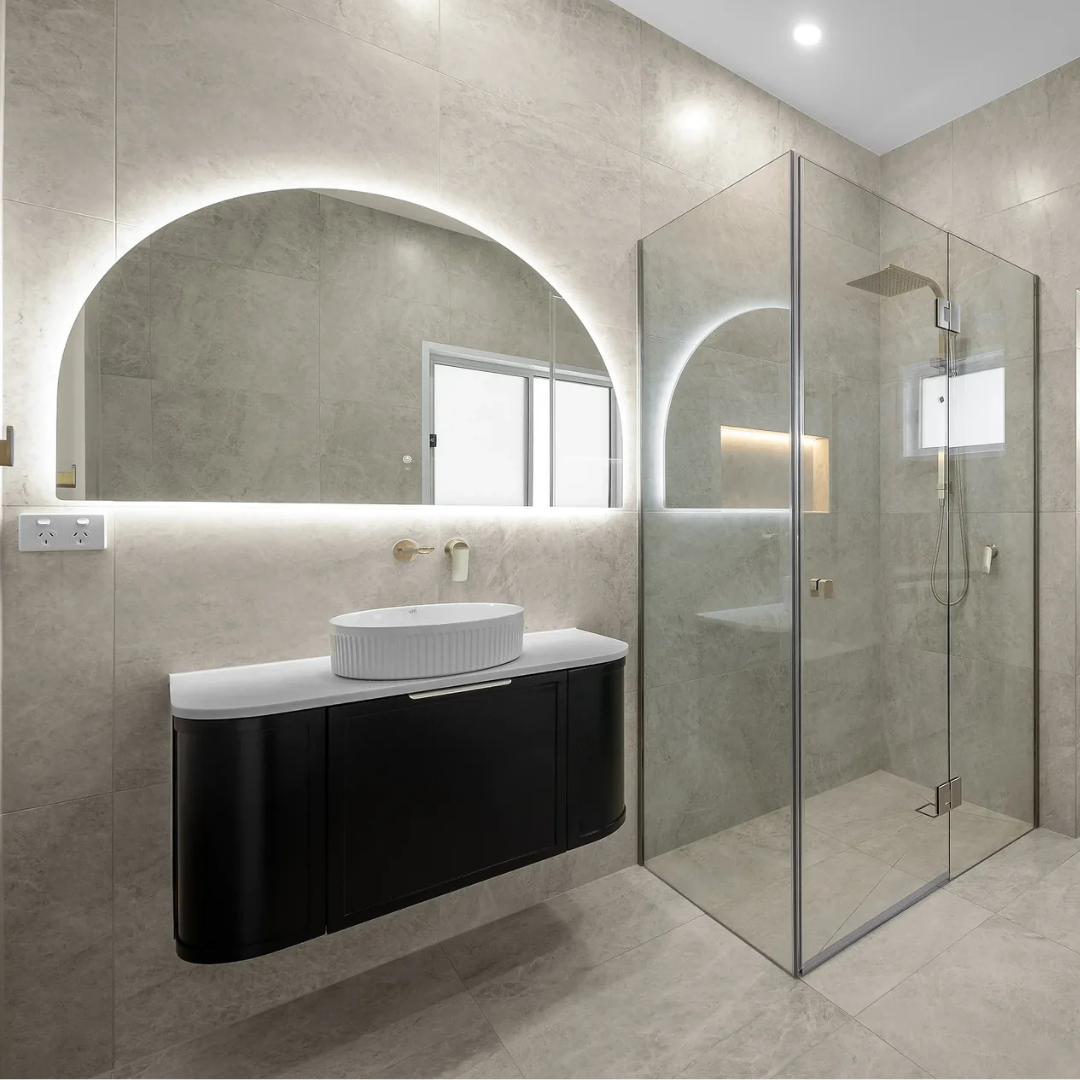
Curves are the other defining move. Curved island benchtops, bullnose edges and rounded cabinetry corners soften the hard geometry kitchens carried for a decade, and pair naturally with the organic colour palettes now in demand. In hardware, brushed brass and warm metallics lead, while concealed and integrated appliance design keeps growing: rangehoods finished in plaster or wrapped in the benchtop material, dishwashers hidden behind cabinetry panels, and appliance cupboards that keep the benchtop genuinely clear.
On benchtops, zero silica engineered stone and porcelain are now the standard following the 2024 regulation change, with waterfall edges on island benches remaining one of the most requested premium details. For homeowners updating on a tighter budget, vinyl wrap remains one of the most cost effective ways to transform existing cabinetry, and in the right areas it can extend to the benchtop as well.
Read the full guide: Can You Vinyl Wrap a Kitchen Benchtop? A Melbourne Guide
Permits, Apartments and the Rules Worth Knowing
Most kitchen renovations in Melbourne do not require council approval, provided the work stays within the existing footprint and involves no structural changes. Removing a wall between the kitchen and an adjoining room, or extending the footprint, generally does require a building permit under the Building Act 1993, and any structural change should be assessed by a qualified building surveyor before work begins. In heritage overlay areas, common across Melbourne's inner suburbs, additional council involvement can apply even to work that would otherwise be straightforward.
Apartments and townhouses run by an Owners Corporation add their own layer. Cosmetic updates within your own kitchen usually need only notification, but anything touching common property, including shared plumbing risers or structural walls, generally needs written approval before work starts, and lift bookings, insurance certificates and working hour restrictions all need organising with building management well ahead of the start date.
Read the full guide: Apartment Kitchen Renovations in Melbourne: What's Different
Choosing the Right Kitchen Renovation Company
The right renovation partner makes the difference between a smooth project and a stressful one. Look for genuine local experience across Melbourne's different housing types, since a renovator who mainly works on new builds may not have the instincts for a Victorian terrace's uneven walls or a 1970s brick veneer's quirks. Insist on transparent, itemised quoting rather than a single lump sum, so you can see exactly where your budget is going and adjust scope with clear information rather than guesswork.
Above all, look for a design led process. A renovator who questions whether your initial brief will genuinely work for your household, rather than simply installing whatever you first describe, is showing you exactly the judgement you are paying for.
Read the full guide: 27 Essential Questions to Ask Kitchen Renovators in Melbourne
Common Kitchen Renovation Mistakes to Avoid
- Choosing finishes before the layout is finalised, which usually means compromising on a material you loved.
- Underestimating cabinetry lead times and losing weeks waiting for joinery that could have been ordered earlier.
- Moving plumbing for a preference rather than a genuine functional gain, and paying thousands for the difference.
- Leaving ventilation and lighting as afterthoughts instead of planning them alongside the layout.
- Working from pre 2024 benchtop pricing and being caught out by the shift to zero silica stone and porcelain.
- Starting an apartment renovation before confirming Owners Corporation requirements.
Frequently Asked Questions
Q. How much does a kitchen renovation cost in Melbourne in 2026?
The HIA puts the national average between $22,000 and $40,000. A full renovation of lasting quality generally starts from around $30,000 in Melbourne, with most of our projects falling between $30,000 and $49,000 and premium renovations running $50,000 to $80,000. If you are unsure where your project sits, a free consultation is the fastest way to find out.
Q. How long does a kitchen renovation take?
On site work generally takes four to eight weeks, though with design and cabinetry lead times the full project usually runs three to four months.
Q. What happened to engineered stone benchtops?
High silica engineered stone was banned nationally from 1 July 2024. Zero silica engineered stone and porcelain are now the standard, typically costing $500 to $2,000 more than equivalent pre ban quotes.
Q. What kitchen style is most popular in Melbourne right now?
Modern farmhouse and warm contemporary styles lead in 2026, with shaker profile cabinetry remaining the most popular single door style and warm timber overtaking white as the leading cabinetry direction.
Q. Do I need council approval to renovate my kitchen?
Not for most renovations within the existing footprint. Structural changes generally require a building permit, and apartments may need Owners Corporation approval.
Q. What is the biggest cost driver in a kitchen renovation?
Cabinetry, at typically 30 to 40 percent of the total budget, followed by whether plumbing stays in its existing position.
Q. Can I stay in my home during a kitchen renovation?
Most homeowners do, though you should plan for a period without a functioning kitchen while cabinetry and appliances are installed.
Start Planning Your Kitchen Renovation
Ready to start planning your kitchen renovation? Visit our showroom at Unit 64, 31 to 37 Norcal Road, Nunawading, call our team on 03 9034 6490, or book a free consultation.

Leave a comment
This site is protected by hCaptcha and the hCaptcha Privacy Policy and Terms of Service apply.