
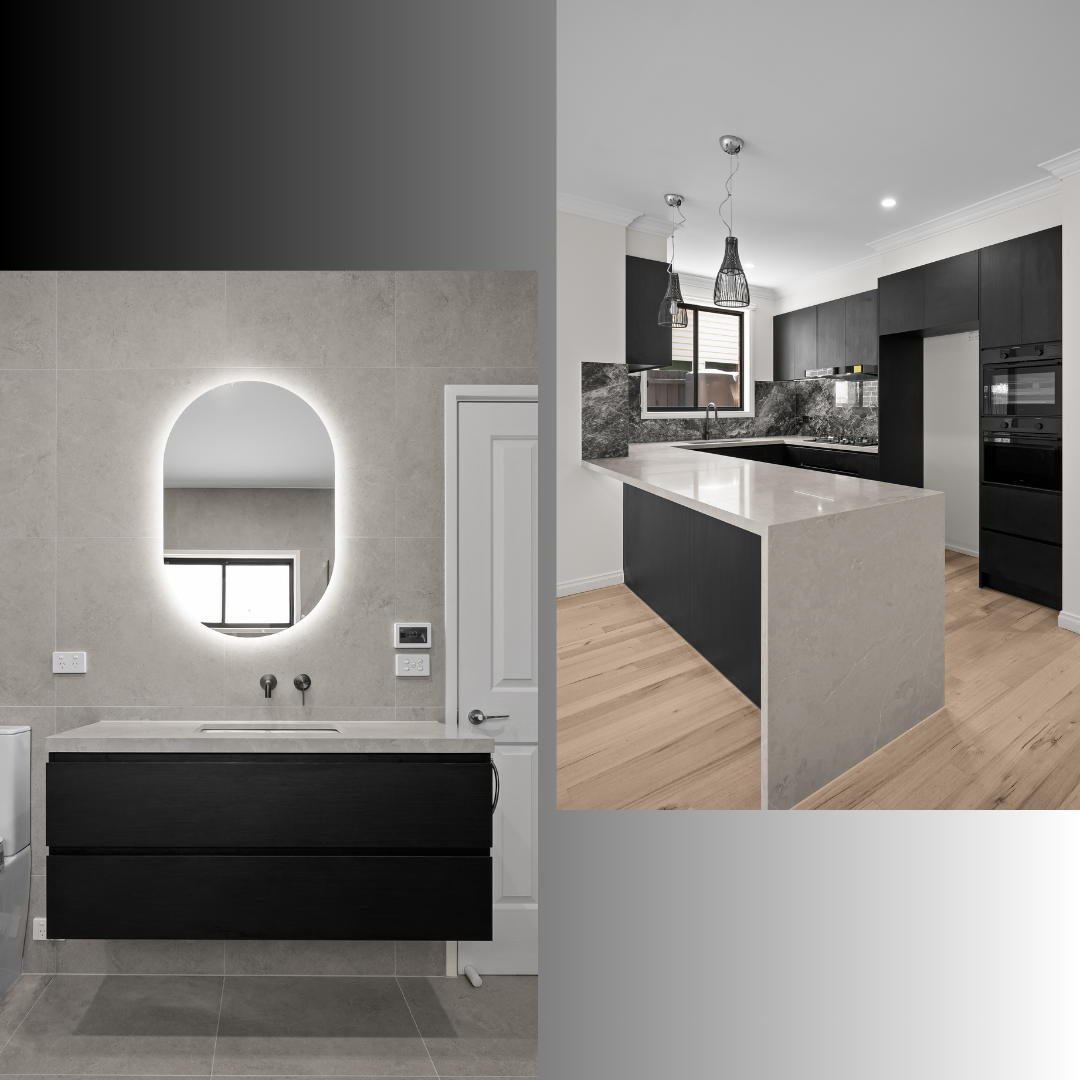
Walk through some renovated homes, and the kitchen and bathroom feel like they belong to two different houses. One room feels warm and timber-toned; the other feels cold and clinical white. It is usually not because either room looks bad on its own. It is because nobody thought about how the two spaces would feel walking from one into the other. If you are renovating your kitchen and bathroom, even if you are doing them at different times, a little planning around finishes goes a long way toward making your whole home feel considered rather than accidental.
This matters just as much whether you are renovating both rooms in one project or staging the work, which is covered from a budgeting angle in the companion article on kitchen and bathroom renovation ROI. This guide focuses purely on the design side: how to choose tapware, cabinetry and colour so the two rooms feel like part of the same home.
Matching Does Not Mean Identical
The goal is not to use the exact same tile or tapware in both rooms. Doing that can actually look flat and try hard, especially in an older home where the kitchen and bathroom are different sizes and serve completely different purposes. The real goal is consistency: a shared language of finishes that tells your eye the whole home was designed by the same hand, even though the rooms themselves look quite different.
Think of it the way a stylist thinks about an outfit. The shoes do not need to be the same colour as the shirt, but they need to sit within the same palette. The same logic applies to a home, room to room.
Start With Tapware Finish
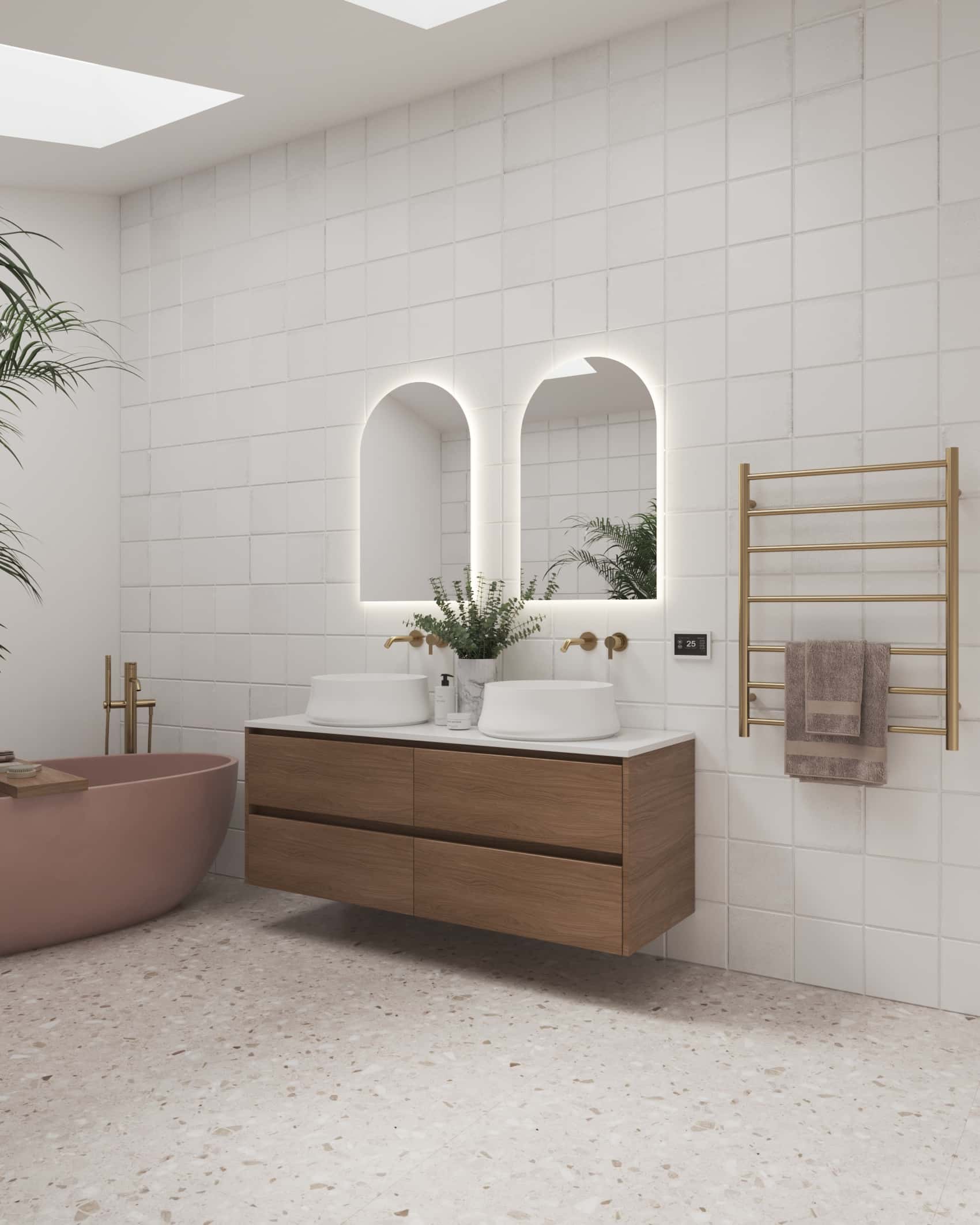
Tapware is one of the easiest ways to tie rooms together because it shows up in both spaces, at the kitchen sink and mixer, and at the bathroom basin, shower and bath. Looking through APD Design's own tapware collection is a useful way to see this in practice. Pieces such as the Soul Groove Wall Mixer in Brushed Copper and the matching Eternal Basin Mixer in Brushed Copper show how the same warm metal tone can be carried from a kitchen sink through to a bathroom basin without the two fittings needing to be the same product.
- Pick one finish family for the whole home if you want a clean, cohesive look. A brushed copper or brushed nickel kitchen mixer paired with matching bathroom tapware reads as intentional from room to room.
- If you want some variety, keep one finish dominant and use a second only as an accent, such as warm brushed tones throughout the home with a single black kitchen tap as a feature.
- Avoid using three or more different metal finishes across a small to medium home. It tends to look unplanned rather than deliberately eclectic.
- If your kitchen and bathroom are being renovated at different times, choose the tapware finish first and treat it as fixed, since it is the hardest and most expensive detail to change later.
Carry the Finish Through to Heating and Accessories
Tapware is not the only fitting that carries a metal finish. Heated towel rails, robe hooks and shower accessories all come in the same range of tones, and matching them properly is what makes a bathroom feel fully resolved rather than half finished. The VS900H heated towel rail from APD Design's heating collection is a good example, since it is available in Polished Stainless Steel, Brushed Stainless Steel, Brushed Nickel and Brushed Gold, along with several other finishes. Choosing the towel rail finish to match your tapware, rather than picking it separately later, is a simple step that is easy to miss.
APD Design also stocks tapware and heating from established brands including Thermogroup, Bella Vista, ADP, Johnson Suisse, Otti and Timberline. Sticking to one or two brands across the kitchen and bathroom, rather than mixing several, also helps keep finish batches and tones consistent, since different manufacturers can interpret a description like brushed nickel slightly differently. The full brand range is worth browsing side by side before locking anything in.
Carry Cabinetry Tones Through the Home
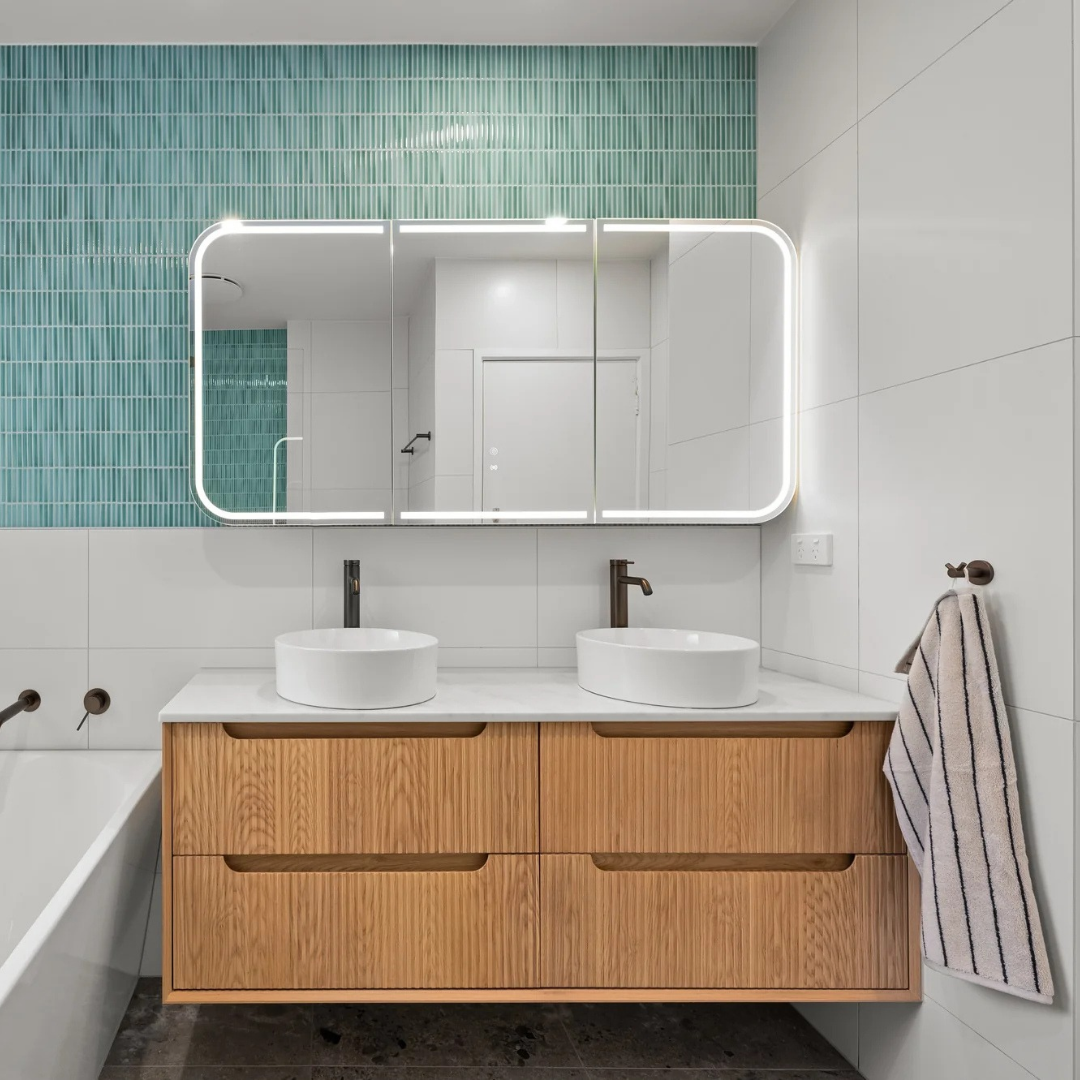
Kitchen cabinetry and bathroom vanities do not need to be the same colour, but they should feel related. If your kitchen has warm timber toned joinery, a stark white gloss vanity next door can feel disconnected, even if both are attractive individually. A finish such as Monroe Matte Forest from APD Design's vanity collection shows how a bold, dark tone can work as a vanity finish. The same idea applies in reverse: if a tone like that is used in the kitchen, echoing it somewhere in the bathroom, even just on the vanity door, ties the two rooms together.
- Choose vanity and kitchen cabinetry finishes from the same colour family, such as both in a warm timber tone or both in a matte neutral like sage or charcoal.
- If you are using two tone cabinetry in the kitchen, such as a dark lower cabinet with a lighter upper, echo one of those two tones in the bathroom vanity rather than introducing a third unrelated colour.
- Vinyl wrap and laminate finishes now come in a wide enough range that matching an undertone between kitchen and bathroom is usually achievable even on a tighter renovation budget.
Extend the Palette to Benchtops, Tiles and Grout
Once tapware and cabinetry are settled, the same thinking applies to stone, tiles and grout, which are often chosen much later in the process but matter just as much to how connected the home feels.
- If your kitchen benchtop has warm veining, look for a bathroom vanity top or feature tile with a similar undertone rather than a cooler, greyer stone that fights against it.
- Splashback tiles in the kitchen and feature tiles in the bathroom do not need to match, but staying within the same colour temperature, either warm or cool, keeps the transition between rooms smooth.
- Grout colour is easy to overlook, but a stark white grout in the kitchen and a charcoal grout in the bathroom can make two otherwise similar tiles feel like they belong in different homes. Keep grout tone consistent with your overall palette.
A Simple Framework You Can Use
If you only take one thing from this guide, use this order of decisions when planning finishes across both rooms.
- Choose your metal finish first, since it appears in both rooms and is the hardest detail to change later.
- Choose your cabinetry tone family second, keeping kitchen joinery and the vanity related even if they are not identical.
- Choose your stone and tile tones third, matching warm undertones to warm and cool undertones to cool.
- Choose one accent colour, such as a paint colour or a splashback tile, and use it sparingly in both spaces so it reads as a deliberate thread rather than a coincidence.
Using 3D Renderings to Test a Palette Before Committing
Choosing finishes from small samples is genuinely difficult, since a swatch the size of a coin behaves very differently once it covers a whole benchtop or an entire wall of tiles. This is part of why APD Design's renovation process includes a 3D design rendering stage before any material is ordered. If you are trying to match a kitchen and bathroom palette, ask to see both rooms rendered together, or at least side by side, rather than approving each room's finishes in isolation. It is far easier to swap a tile or a tapware finish on screen than after it has already been installed.
What If You Are Renovating at Different Times
Not everyone renovates the kitchen and bathroom in the same project, and that is completely reasonable, particularly if budget means the work needs to be staged. If you are doing the kitchen now and the bathroom later, write down your tapware finish, cabinetry tone and stone or tile undertone before you finish the first room. Keeping a simple record, even just photos and product names, means you or your renovator can match the second room properly when the time comes, instead of trying to guess from memory a year or two later.
Seeing Finishes Together at the Showroom
Photos and product pages only go so far when judging how two finishes will sit next to each other. The APD Design showroom at Unit 64, 31 to 37 Norcal Road, Nunawading, is open Monday to Friday from 9am to 5pm, with weekend visits available by appointment, and displays tapware, vanities and heating products from across the brand range together in person. Seeing a brushed copper mixer next to a matching towel rail and a timber toned vanity sample is a much faster way to confirm a palette than working from photos alone.
Frequently Asked Questions
Q. Do my kitchen and bathroom tapware need to be the exact same finish?
Not necessarily. They should be from the same finish family so the home feels connected, but small variations in fitting style are fine as long as the metal tone matches.
Q. Can I mix two different metal finishes in one home?
Yes, as long as one is dominant and the other is used sparingly as an accent. Mixing three or more finishes across a small to medium home usually looks unplanned rather than intentional.
Q. Does matching cabinetry mean using the same colour in the kitchen and bathroom?
No. It means choosing colours from the same family or undertone, such as two related warm timber tones, rather than using the exact same finish in both rooms.
Q. How do I choose one finish if my kitchen and bathroom are being renovated at different times?
Decide on your tapware finish and cabinetry tone family before finishing the first room, and keep a record of the exact products used so the second room can be matched properly later.
Q. Where can I see tapware and cabinetry finishes together before deciding?
The APD Design showroom in Nunawading displays tapware, vanities and cabinetry finishes together, which makes it much easier to see how they will look side by side before you commit. You can also browse the tapware and vanity collections online first to narrow down a shortlist.
Conclusion
A kitchen and bathroom do not need to be renovated at the same time to feel like they belong to the same home. What matters is choosing a consistent language of metal finishes, cabinetry tones and colour palette, and sticking to it across both rooms. Related reading on style choices within each room, such as Dark Kitchens Without the Fingerprints and How to Create a Soft Contemporary Bathroom, can help narrow down a direction before finishes are chosen. If you want help working out a palette that will carry through your whole home, the team at APD Design can talk you through tapware, cabinetry and finish options at the Nunawading showroom, or as part of a renovation quote.

Leave a comment
This site is protected by hCaptcha and the hCaptcha Privacy Policy and Terms of Service apply.