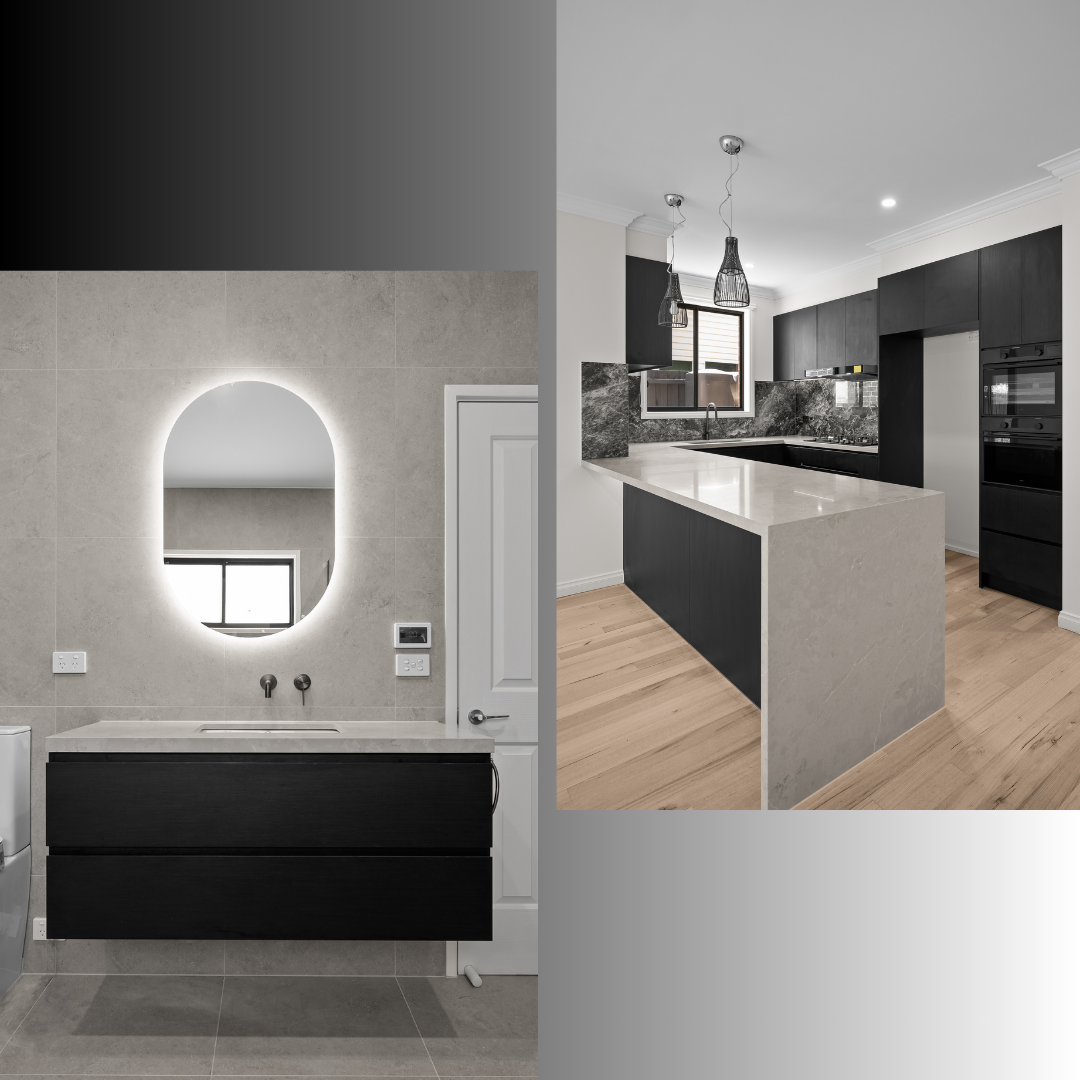
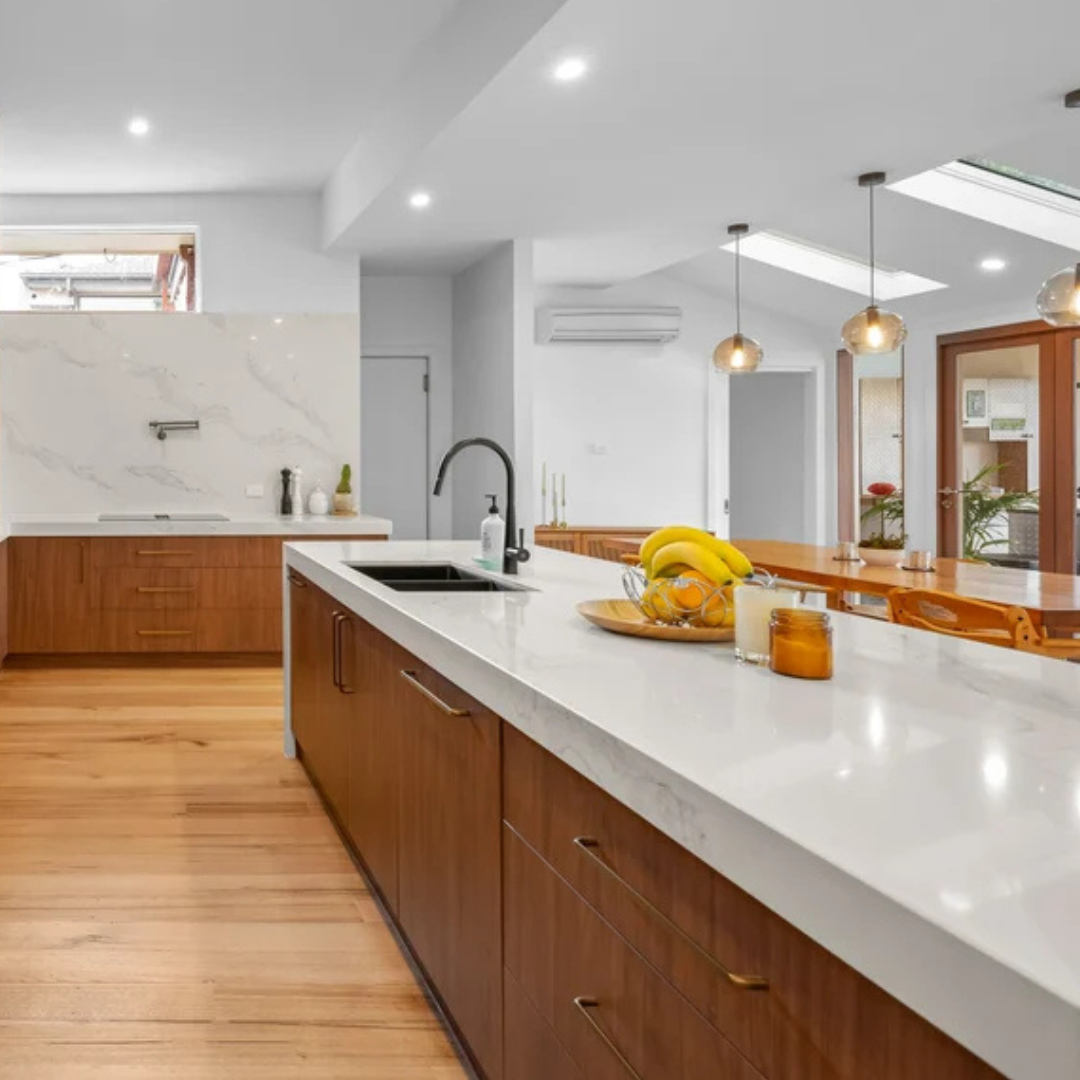
Walk into any Melbourne kitchen and your eye lands on the benchtop first. It is the biggest unbroken surface in the room, it sits at eye level when you walk in, and every other finish, cabinet colour, splashback tile, tapware, flooring, has to agree with it. Get the benchtop right and the rest of the kitchen falls into place around it. Get it wrong and you spend the next 15 years wondering why your beautiful cabinetry still looks off.
Benchtop choice is also where most Melbourne homeowners feel the most lost. The engineered stone ban that came into force on 1 July 2024 has rewritten the rules. Products that would have been the default pick two years ago are no longer available in the form people remember them. New materials have moved into their place. Prices have shifted. The showroom lineup looks different.
This guide covers every mainstream benchtop material you will see in a Melbourne kitchen in 2026. For each one, you will find what it actually is, how it looks in Melbourne homes, what it costs supplied and installed, how it holds up to the way Australians cook, what to pair it with, and where it fits. If you are at the start of a wider project, read this alongside our complete guide to kitchen renovations in Melbourne and the Melbourne kitchen renovation cost guide, which together put benchtop choice in the context of the full renovation.
Why 1 July 2024 matters for your benchtop choice
Australia became the first country in the world to ban engineered stone that contains crystalline silica. The ban was recommended by Safe Work Australia after a sharp rise in silicosis diagnoses among stonemasons. Silicosis is an incurable lung disease caused by inhaling fine silica dust during cutting and polishing. The ban was imposed to protect workers, not consumers. Engineered stone benchtops that are already installed in homes are completely safe to keep and use.
What the ban means in practice is that from 1 July 2024, no new engineered stone benchtop containing crystalline silica can be manufactured, supplied, processed or installed in Australia. From 1 January 2025, these products also became prohibited imports. The ban covers benchtops, panels and slabs. It does not cover finished items like sinks.
Melbourne's benchtop market has reorganised around this reality. Natural stone has returned to the mainstream after years of being treated as a premium only choice. Porcelain and sintered stone, which were niche before 2024, have grown fast. Timber and laminate are back in serious conversations after being written off during the engineered stone era. Low silica and silica free versions of some old brands have launched, but they are still a small share of the market.
If you already have an engineered stone bench and you are planning a renovation, the removal is permitted but has to follow the dust control procedures the ban requires. This is a question to raise with your renovator at consultation. On every kitchen we take on through our 7 step renovation process, the removal and disposal of existing engineered stone is handled by the trades qualified for it.
1. Natural stone
Natural stone means a slab of marble, granite, limestone, travertine or quartzite that has been quarried from the earth, cut, and shaped to your kitchen. The look is unrepeatable. No two slabs match. Veining, colour depth, and the way light moves across the surface are the reasons stone has anchored luxury kitchens for centuries.
What it costs in Melbourne
Supplied and installed in Melbourne, you can expect to pay $800 to $2,200 per square metre for granite, $900 to $2,500 for marble, and more for premium slabs like Calacatta Oro or Taj Mahal quartzite. The slab is only part of the quote. Fabrication, edge profile, cutouts for sinks and cooktops, waterfall ends, and the complexity of mitred joins all add to the final figure. On a typical Melbourne kitchen with 6 to 8 square metres of bench, natural stone usually lands between $7,000 and $18,000 installed.
The look
Carrara marble, in soft white with grey veining, remains the first choice for a classic Hamptons or soft contemporary kitchen. Calacatta Oro adds gold veining and a more luxurious character. For a darker, more dramatic kitchen, quartzites like Taj Mahal and Fusion Wow bring depth without the maintenance concerns of true marble.
The Hamptons kitchen style and the soft contemporary look both lean heavily on natural stone, usually paired with Shaker cabinetry in off white, warm white or soft greige. In Hawthorn, Kew, Surrey Hills, Camberwell and Balwyn, where period homes dominate, natural stone is often the default. In Fitzroy, Collingwood and Brunswick, where terraces and warehouses dominate, darker quartzites and veined marbles work beautifully with timber.
Pros
- Every slab is unique. The slab you choose cannot be reproduced in another kitchen.
- Heat resistant. You can rest a hot pan on it without damaging the surface.
- Genuine, lasting property value. Natural stone adds buyer appeal in premium Melbourne suburbs.
- Patina. The surface develops character over time rather than looking tired.
- Repairable. Small chips and scratches can be polished out.
Cons
- Marble and limestone are porous. They stain from red wine, lemon juice, olive oil and tomato sauce if not sealed and resealed every 5 to 10 years.
- Softer stones can etch, which shows as cloudy spots from acidic liquids.
- Lead time can run 4 to 8 weeks for premium slabs, longer for anything imported.
- Heavy. Cabinets need to be built to carry 60 to 90 kilograms per square metre.
- Visible seams on long runs. Natural stone slabs are limited in length, so joins are often needed.
Care in a Melbourne kitchen
Seal with an impregnating sealer every 5 to 10 years, more often around the sink and cooktop. Wipe spills quickly, especially acidic ones. Avoid supermarket spray cleaners with lemon or vinegar. For daily cleaning, warm water and pH neutral soap are enough. For deeper cleaning, use a stone specific cleaner from the same supplier who sealed it. Melbourne's water is reasonably soft so limescale rarely becomes a problem on stone, but hard water deposits around the tap mixer should be wiped off before they dry.
Best for
Owners who want a feature benchtop and will accept the small marks and etchings that come with daily use as part of the character. Natural stone suits Hamptons, French Provincial, soft contemporary, and heritage style renovations. For dramatic contemporary looks, consider darker granites or quartzites paired with dark cabinetry, see our post on dark kitchens without the fingerprints for how to pull the look together without the daily cleaning burden.
2. Porcelain and sintered stone
Porcelain benchtops are made by compressing clay, feldspar and mineral pigments under extreme pressure, then firing them at temperatures above 1200 degrees Celsius. Sintered stone, the newer category, uses crushed natural stone fused together under pressure and heat without any resin. Both are silica safe or silica free, which is why the industry has moved towards them quickly since the engineered stone ban.
Brand names you will see in Melbourne showrooms include Dekton, Neolith, Laminam, Lapitec, Smartstone Athena and Caesarstone Porcelain. Each uses slightly different formulations but all deliver similar performance at the bench.
What it costs in Melbourne
Supplied and installed in Melbourne, porcelain and sintered stone usually run $1,100 to $2,000 per square metre. On a typical 6 to 8 square metre kitchen, that puts the installed cost between $8,000 and $15,000. The slab itself is often similar in price to what engineered stone used to be, but installation is higher because specialist cutting tools and tradespeople are needed. Not every stonemason in Melbourne works with porcelain, so your renovator will usually have a shortlist of fabricators they trust.
The look
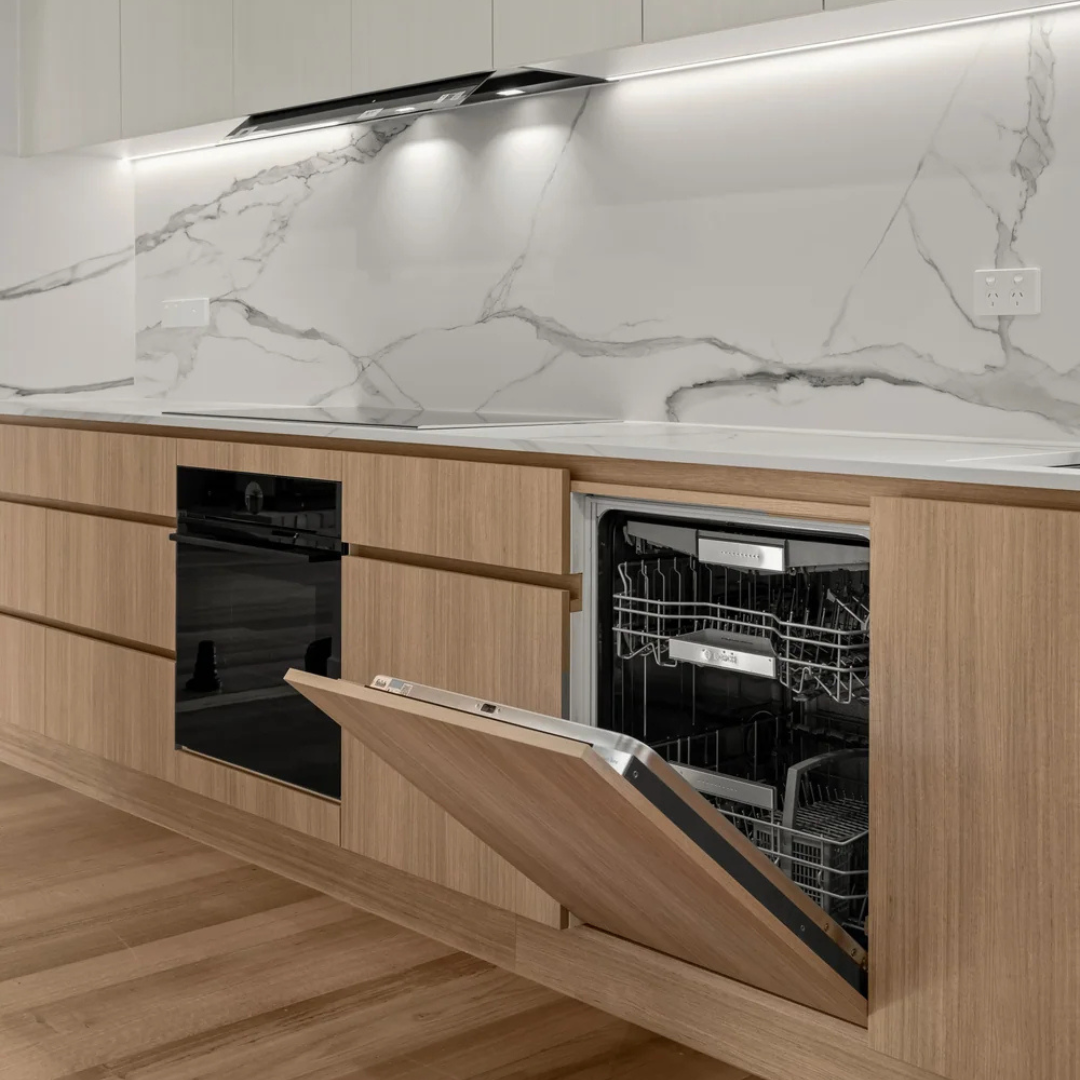
Porcelain can imitate almost any surface. Marble veining, concrete, aged timber, rusted metal, raw cement, or a plain flat colour, in matte, honed, polished or satin finishes. Because the pattern is printed into the body of the slab and runs edge to edge, you can have the look of white Statuario marble without the staining worry.
Slabs are available much larger than engineered stone was, up to 3200 by 1600 millimetres in some ranges, so you can run a long island or a 3 metre run of bench with no visible join. Thin profiles down to 6 millimetres are available for the current trend of slim, floating benchtops. Thicker 20 and 30 millimetre options read as solid traditional stone.
Pros
- Silica safe or silica free. No health concern during cutting or installation.
- Non porous. No sealing needed, no staining from wine, oil, coffee or acids.
- Scratch resistant. Will not mark from a chef's knife on the surface, though chopping directly on it is not recommended.
- Heat resistant. Hot pans will not damage the surface.
- UV stable. Colour will not fade near a sunny window.
- Available in very large slabs so long benches can run join free.
Cons
- Installation is specialist work. Fewer fabricators mean quotes can vary widely.
- Can chip at edges if dropped on, so edge profile and bullnose detailing matter.
- Printed patterns can look repetitive if a long run is cut from the same slab area.
- Harder to repair than natural stone. A chipped corner usually cannot be polished out.
- Thin 6 millimetre profiles need the right subframe underneath or they can crack.
Care in a Melbourne kitchen
Porcelain is almost maintenance free. Warm water and a soft cloth for daily cleaning. For stuck on marks, a diluted all purpose cleaner or a cream cleanser works. Melbourne's hard water can leave spots around the tap mixer and sink, so wipe these down. No sealing ever needed. Avoid heavy impacts on corners and edges, especially the thin profile versions.
Best for
Contemporary and architectural kitchens, families who want a very low maintenance surface, Melbourne homeowners who liked the look of engineered stone and want the closest replacement with better performance. Also the right choice for busy families with young children, where red wine and tomato pasta sauce are both daily hazards.
3. Timber
Timber benchtops in Melbourne come in two main forms. Butcher block style, where straight staves of hardwood are glued side to side to form a thick slab, and full width solid timber, which is less common and more expensive. Common Australian species include blackbutt, spotted gum, ironbark, Victorian ash and jarrah. American oak is popular for a lighter, Scandinavian feel. Reclaimed timber from old warehouses adds character and sustainability credentials. Bamboo is growing as an eco friendly option.
What it costs in Melbourne
Supplied and installed, timber ranges from $550 to $1,200 per square metre, depending on species, thickness and finish. On a typical kitchen, that is $3,500 to $9,000. Reclaimed timber can be cheaper or significantly more expensive depending on the source. A full timber kitchen is less common than timber used as a feature on an island, breakfast bar, or waterfall end.
The look
Timber brings a warmth and softness that no stone or porcelain can match. The grain, the knots, the natural variation in colour, all add character that reads differently in morning sun and evening lamp light. Melbourne's two tone kitchen trend has made timber especially popular as a feature material. Our post on two tone kitchens pairing timber look lowers with white uppers covers how to combine timber with other finishes without the kitchen looking busy.
Lighter species like American oak and Victorian ash suit Scandinavian, minimalist and coastal kitchens. Darker species like spotted gum, blackbutt and jarrah suit modern farmhouse, industrial and modern Hamptons styles. Reclaimed timber works beautifully in heritage renovations and Fitzroy or Collingwood warehouse conversions.
Pros
- Warm, inviting look that softens hard cabinetry and tile.
- Can be sanded back and refinished if it marks or discolours over time.
- Sustainable if sourced from certified Australian forests or reclaimed from existing buildings.
- Lighter than stone. Cabinets do not need to be built to carry extra weight.
- Easy to work with on site. Last minute cutouts and adjustments are straightforward.
- Price friendly compared to natural stone or porcelain, especially for feature use.
Cons
- Needs sealing with food safe oil, hard wax oil, or a clear two pack lacquer. Oil finishes need reapplication yearly or every few years. Lacquer finishes last longer but cannot be spot repaired.
- Water pooling around taps and sinks will mark unsealed timber and can lift the finish.
- Not ideal next to a cooktop. Heat can scorch the finish and the timber below.
- Will dent from heavy impact, especially softer timbers.
- Grain can lift if steam from a boiling kettle sits on an unsealed section.
Best for
Hamptons, Scandinavian, minimalist, coastal, modern farmhouse and modern country kitchens. Island or breakfast bar features in otherwise stone or porcelain kitchens. Melbourne homeowners who like a lived in look and are happy to oil the surface once or twice a year.
4. Laminate
Laminate benchtops are made by fusing a printed decorative paper layer to a moisture resistant MDF or particleboard core, under heat and pressure. Modern Australian brands like Laminex, Formica, Polytec and Nover carry hundreds of designs. The old brown and beige laminate of the 1980s is long gone. Today's laminates come in stone looks, timber looks, concrete looks, soft touch matte finishes, satin finishes, and plain solid colours.
What it costs in Melbourne
Laminate is the budget leader. Supplied and installed, you can usually land it between $200 and $500 per square metre, which puts a typical Melbourne kitchen's benchtop at $1,500 to $4,000. On a tight renovation budget, laminate frees up thousands of dollars for better cabinetry, better tapware, or better appliances.
The look
Current textured laminates from Laminex Essastone and Polytec Legato read as stone or concrete from more than a metre away. Matte finishes have replaced the shiny look of older laminate. The main giveaway of laminate used to be the edge, where a visible brown or black line showed. Modern postformed and ABS edged laminates hide the join to the point where even trade professionals have to look closely.
For a budget renovation, laminate stone looks pair well with Shaker or slab cabinetry in a mid tone colour. A laminate benchtop in a classic style, with a visible chunky profile, can give a kitchen a convincing stone look at a fraction of the cost.
Pros
- Cheapest mainstream option by a wide margin.
- Wide design range, including convincing stone and timber looks.
- Quick to install and easy to replace later if you want to upgrade.
- Light. No weight concerns for cabinetry.
- Matte finishes resist fingerprints and visible wear.
Cons
- Not heat resistant. A hot pan straight from the oven will leave a mark.
- Chips and swells at the edges if water sits for long periods, especially around the sink.
- Resale value is lower than stone or porcelain in premium Melbourne suburbs.
- Visible join lines where sheets meet, especially around the cooktop.
- Cannot be refinished. Once worn, replacement is the only option.
Best for
Rental properties, holiday homes, first homes on a tight budget, and short term renovations where the owner plans to upgrade in 5 to 7 years. Also a smart choice for a secondary kitchen in a granny flat or outdoor space. Our post on vinyl wrap kitchens as a cost effective option and the small kitchen space saving ideas post cover other options for budget conscious Melbourne homeowners.
5. Engineered stone, where it stands today
Engineered stone was the single most popular benchtop material in Australia for 20 years. If your current kitchen has a Caesarstone, Smartstone, Essastone, Silestone or Quantum Quartz benchtop installed before 1 July 2024, that is engineered stone. You can keep it. You can use it exactly as before. The ban does not apply to benchtops already installed in a home.
What you cannot do, as of 1 July 2024, is order a brand new engineered stone benchtop that contains crystalline silica. The ban covers manufacture, supply, processing and installation. Some suppliers have launched low silica or crystalline silica free versions of their old products, often marketed as the next generation of the brand. These are starting to appear in Melbourne showrooms but are a small share of what is available.
If a stonemason or showroom quotes you engineered stone in 2026, ask for the product data sheet showing the crystalline silica content. Legitimate current product will be clearly marked as compliant. Our showroom in Nunawading stocks sample panels of the compliant alternatives if you want to see them in person.
Removing an existing engineered stone benchtop during a renovation is permitted, but the stonemason doing the cut out must follow silica dust control procedures. These include wet cutting, extraction systems and respiratory protection. On a Melbourne renovation, this adds to the demolition cost compared to removing a laminate or timber bench. Factor it into your quote.
Other benchtop options worth knowing about
Solid surface
Corian is the best known brand in Australia. Hi Macs is another. Solid surface is made from an acrylic polymer blended with natural mineral filler, cast into sheets. Supplied and installed in Melbourne, it runs around $900 to $1,500 per square metre. It is non porous, can have seamless integrated sinks and splashbacks, and is softer to the touch than stone. Small scratches can be sanded out. It is less heat resistant than natural stone or porcelain, so trivets are needed.
Polished concrete
Polished concrete makes a strong architectural statement. Supplied and installed, it runs $800 to $1,600 per square metre. The surface is heavy, so cabinet carcasses need to be built to carry it, and the floor beneath may need checking. It needs sealing with a food safe sealer and develops a patina over time. Hairline cracks are normal and part of the character. Best suited to industrial, warehouse conversion and some modern architectural styles.
Stainless steel
Common in commercial kitchens, less common in Melbourne homes but gaining ground in professional style and industrial kitchens. Supplied and installed, stainless steel runs $600 to $1,200 per square metre. Easy to clean, hygienic, heat resistant, and can be fabricated with integrated sinks. The downside is that it shows every fingerprint and every small scratch. Softer brushed finishes mask marks better than mirror polished.
Pairing the benchtop with the rest of the kitchen
The benchtop is a decision that cascades. Once you choose it, cabinetry colour, splashback, flooring, tapware finish and even cooktop choice have to agree with it. Melbourne kitchens that work well tend to follow a simple rule. One statement material, one supporting material, one neutral background.
If natural stone with strong veining is the statement, keep cabinets and splashback quiet. Soft off white Shaker doors, a simple subway tile splashback or a stone splashback that matches the bench, and warm timber flooring. Our post on matching finishes across the kitchen and bathroom covers how to carry a benchtop decision through to tapware, cabinetry and the finishes in nearby rooms so the whole house reads as one project.
For dark cabinetry, lighter benchtops create contrast and reduce the heavy feeling. For light cabinetry, dark benchtops ground the room. For timber cabinetry, pair with a stone that pulls out a tone already in the timber, warm grey, cream or soft brown rather than cold white.
Edge profiles matter more than you think
The edge profile of your benchtop changes how heavy or light it looks, how it feels to lean against, and how much it costs. Common profiles include:
- Square edge. The modern default. Clean, minimal, works with most styles.
- Mitred edge. Two pieces of stone joined at 45 degrees to create a thicker visible edge, often 60 to 100 millimetres. Dramatic look, more expensive, suits contemporary kitchens.
- Pencil round. A soft 2 to 3 millimetre radius on the top edge. Looks square but feels softer and chips less. Good family choice.
- Bullnose. A full round profile. Older, more traditional look. Less common now.
- Waterfall. The bench runs over the end of the island and down to the floor as one continuous piece. Very popular in Melbourne contemporary kitchens. Adds visual weight and shows off the material.
Mitred edges and waterfalls add significant cost because they need extra material and more fabrication time. A 60 millimetre mitred edge on a natural stone island can add $1,500 to $3,000 to the benchtop cost. Factor this in from the start.
Island and perimeter, mix or match
One of the biggest contemporary trends in Melbourne kitchens is using different materials for the island and the perimeter bench. A hardworking porcelain on the perimeter where cooking happens, with a feature natural stone or timber island as the visual centrepiece. This approach lets you have the stone or timber look you want on the surface people see without exposing it to the daily cooking abuse near the cooktop.
On our Beaumaris and Fitzroy North kitchen projects, both of which can be seen on our projects page, this is the approach we have taken. The result is a kitchen that works beautifully for a busy family while still looking like a design feature when guests arrive. See the full gallery on the Apadana projects page for photographs of each.
A quick decision helper
If you are stuck, the shortcut below helps most Melbourne homeowners narrow the field in under a minute.
|
If this matters most to you |
Start by looking at |
Typical install cost on a 7 sqm kitchen |
|---|---|---|
|
Luxury look, feature statement, long term property value |
Natural stone, then porcelain |
$8,000 to $18,000 |
|
Low maintenance, no sealing, strong family use |
Porcelain or sintered stone |
$8,000 to $15,000 |
|
Warmth, softness, lived in look |
Timber on the island, stone or porcelain elsewhere |
$6,000 to $12,000 combined |
|
Budget, quick turnaround, rental or holiday home |
Laminate |
$1,500 to $4,000 |
|
Modern architectural look, thin profile, large slabs |
Porcelain in a 6 or 12 millimetre profile |
$9,000 to $16,000 |
|
Classic Hamptons, French Provincial, traditional |
Carrara marble or Calacatta marble |
$9,000 to $18,000 |
|
Industrial, warehouse, raw look |
Polished concrete or stainless steel |
$6,000 to $11,000 |
How Melbourne's climate affects benchtop choice
Melbourne's weather does not punish benchtops the way tropical Queensland or dry outback South Australia can. The real climate concerns here are two. First, heritage homes often have older cabinetry carcasses that are not built to carry very heavy stone. Natural stone and polished concrete may need the cabinets reinforced or replaced during the renovation. Second, Melbourne homes with large northerly facing windows can get strong UV exposure on part of the bench. Timber in this situation can fade or discolour. Porcelain, natural stone and laminate all handle UV without issue.
How we handle benchtop selection in a Melbourne renovation
Benchtop selection sits in step 3 of our 7 step renovation process. After the initial site inspection, preliminary quote and concept design, we invite you to our showroom at Unit 64, 31 to 37 Norcal Road, Nunawading, to see sample panels, slab photographs and finished kitchen references in person.
The brands and finishes we specify most often are available in the showroom. For natural stone, we also arrange slab yard visits where you can see and select the exact slab that will be cut for your kitchen. This is especially important for marble and quartzite where each slab is unique. Our stocked product ranges, including Bella Vista, ADP and Timberline, include sink mixers, tapware and vanities that pair naturally with the benchtop choices we recommend.
Benchtop choices in recent Apadana kitchens
On our 7 Burgess Street Beaumaris kitchen, the clients wanted a classic, timeless look that would still feel current in 15 years. Natural marble with soft grey veining on the island, paired with a hardworking porcelain on the perimeter, delivered both. The matching finishes carry through the butler's pantry behind.
On our Fitzroy North kitchen, a warehouse style conversion, dark porcelain with concrete look texture was used on all surfaces. The thin 12 millimetre profile sits lightly on dark Shaker cabinetry, with brushed brass tapware and open timber shelving as warm counterpoints.
Both projects, along with others across Melbourne, are available to view on our projects page. If you would like to see a specific type of benchtop in a finished kitchen, mention it when you book your showroom visit and we can arrange a drive by if a nearby project matches.
Related reading
If you are weighing a full renovation vs a refresh, our post on signs it is time to renovate your kitchen rather than refresh it covers the decision in detail. The Melbourne kitchen renovation cost guide explains how benchtop choice fits into a total renovation budget. The modern style kitchen ideas, Hamptons kitchen guide and minimalist kitchens post all show how different benchtop choices change the finished look.
Ready to see benchtop samples in person
Our showroom at Unit 64, 31 to 37 Norcal Road, Nunawading, carries benchtop samples across every category covered above, including sintered stone and porcelain from the brands we specify most often. Book a visit through our contact page, or read more about our kitchen renovation service and our 7 step renovation process to see how benchtop selection sits inside the full project. We also serve specific suburbs with dedicated pages for kitchen renovations in Hawthorn, Port Melbourne, Ascot Vale and Melbourne CBD.