Bathroom renovations have more hidden pitfalls than any other room in the home. The budget is smaller than a kitchen but the chance of expensive mistakes is actually higher. Water, electricity, and tightly packed fittings in a small space leave very little margin for error. One wrong decision at the planning stage can cost thousands to fix later, or leave you with a bathroom that is beautiful on day one and frustrating by month six.
Industry research consistently shows that bathroom owners regret more decisions than owners of any other renovated room. Common regret categories include vanity storage (46 percent of surveyed owners), tile and flooring choices (45 percent), shower configuration (38 percent), cost blowouts (28 percent), and fixture choices (14 percent). The most cited wish they had added is underfloor heating, which comes up again and again in Melbourne feedback because of the cold winters.
This guide walks through 14 of the most common bathroom renovation mistakes we see across Melbourne. Each one includes the vignette, the real cost, and how to avoid it. Many of these are decisions made before any trade turns up, which is why our 7 step renovation process builds decision time into the showroom selection meeting and the preliminary quote stages. If you are at the planning stage, read this alongside our complete guide to bathroom renovations in Melbourne and the post on how to design a hotel style bathroom that still works for everyday life.
Mistake 1, Cutting corners on waterproofing
A couple in Reservoir chose the cheapest renovator from three quotes. The job finished on time and looked great. Eight months later, water appeared on the ceiling of the room below the bathroom. The membrane under the tiles had failed because it was applied too thin and not left to cure properly before tiling started. The fix cost $18,000. The original saving on the renovator was $4,000. The insurer paid nothing because the renovator was unregistered and could not produce a Waterproofing Compliance Certificate.
Waterproofing failure is the single most expensive bathroom mistake in Melbourne. Repair costs typically run $8,000 to $25,000 depending on what has been damaged. Prevention is simple. Use a renovator who is VBA registered, uses a licensed waterproofer, applies a quality membrane system to AS 3740:2021 specifications, and provides a Waterproofing Compliance Certificate at handover. Our waterproofing explainer post covers what to watch for during installation.
Mistake 2, Buying tapware from overseas websites
A homeowner in Caulfield ordered a complete set of designer looking tapware from an overseas site for $600. The equivalent locally would have cost $2,800. Her plumber refused to install it because none of it carried WaterMark certification. Installing it would have breached his licence conditions and voided her insurance. The tapware was unreturnable. She lost $600 and still had to buy local certified tapware.
WaterMark certification is mandatory for all plumbing products installed in Victoria. Products without it are illegal to install and will void your insurance if a leak occurs. The brands we stock, including Bella Vista, ADP and Johnson Suisse, all carry WaterMark. If you want to see certified Australian ranges in person, our tapware collection covers budget to premium at every price point.
Mistake 3, Underestimating fixture and material lead times
A family in Doncaster set a hard deadline of their eldest daughter's wedding in December. They started the renovation in October thinking 6 weeks would be enough. The vanity they wanted was out of stock and had an 8 week lead time. The feature tiles were on backorder from Italy. The shower screen glass panel took 5 weeks to be cut and installed. The bathroom was finished on 18 December, 10 days after the wedding.
Many Melbourne tapware ranges, vanities, feature tiles and premium shower screens have lead times of 4 to 12 weeks. Imported European tiles often run longer. Finalise all selections before you commit to a start date, and get written confirmation of lead times from your renovator. Our showroom selection meeting at step 3 of our 7 step process confirms stock availability and lead times for every item before the contract is signed.
Mistake 4, The door that cannot open
A couple in Elwood planned a stunning bathroom with a double vanity, freestanding bath, and large walk in shower. On the night before tiling, the carpenter realised the bathroom door swung into the vanity. The door could not open fully. The vanity had to be moved 150 millimetres towards the wall, which pushed the shower further over, which pushed the toilet to a corner where the drainage made it awkward. The fix delayed the project 4 days and cost $2,200.
Doors, drawers and shower screens all need swing clearance in a bathroom that is often under 10 square metres. Common fixes include changing to a sliding door, hanging the door to swing out, using a cavity slider, or redesigning the layout so the door clearance is a design input from day one. A good designer catches these at concept stage. On every Apadana bathroom we design, swing clearance is checked at the preliminary quote stage, which is step 2 of our process.
Mistake 5, Skimping on ventilation
A homeowner in Preston installed a decorative exhaust fan that looked beautiful. It moved barely any air. Within 12 months, mould appeared along the grout lines in the shower. Within 2 years, the paint on the ceiling started lifting. The ceiling cornice needed replacement, the tiles needed to be stripped and regrouted, and a proper exhaust fan was installed. Total remediation cost $4,500. A proper exhaust fan at the start would have cost $350.
Victorian bathrooms need genuine ventilation, not decorative ventilation. The National Construction Code specifies minimum air extraction rates for wet areas. A good exhaust fan rated for your bathroom size, ducted directly to outside not into the roof cavity, and controlled by a timer that runs for 20 minutes after you leave, is the baseline. Steam venting out through a decent fan prevents mould, protects paint, and keeps the room smelling fresh.
Mistake 6, Shower niche in the wrong place
A homeowner in Mentone had the shower niche built on the wall facing the shower head. It looked beautiful. It also meant the shampoo bottles got soaked every single time anyone used the shower, which caused the labels to peel off and the bottles to go slimy. The niche had to be relocated after 6 months at a cost of $1,800 plus the retiling cost.
A shower niche is best positioned on the wall perpendicular to the shower head, not opposite it. This keeps bottles and soaps dry between uses, extends the life of your products, and keeps the niche looking clean rather than mould prone. Niche height should be between 1,100 and 1,500 millimetres from the finished floor, within easy reach of adults but above splash height for children.
Mistake 7, Vanity too small for the family
A family of four in Reservoir chose a single basin vanity for their main bathroom to maximise floor space. Within 3 months, morning routines were a bottleneck. Teenagers queued in the hallway. Toothbrushes, hair products and skincare items had no home. The vanity was replaced after 18 months with a double basin wider version, which required re plumbing. Total cost of the mistake was around $5,500.
For a main family bathroom used by 3 or more people, a double basin vanity is almost always worth the extra space it takes. Common widths are 1,200, 1,500 and 1,800 millimetres. A wall hung design keeps visual space clear and lets you clean the floor underneath. Our vanity collection, including the Timberline range and ADP vanities, covers both single and double basin options from compact to oversized. See the sample units in our Nunawading showroom to feel the depth and quality in person.
Mistake 8, Dark grout, light tiles, no plan for cleaning
A homeowner in Fitzroy chose light tiles with charcoal grout for a dramatic contemporary look. Six months later, the grout had faded unevenly where it had been scrubbed, leaving blotchy patches. The whole bathroom was regrouted at $2,800.
Dark grout fades. Light grout stains. Neither problem is a dealbreaker if you plan for it. For dark grout, choose a high quality epoxy grout that holds colour, and clean only with pH neutral cleaners. For light grout, seal it on installation and reseal every 2 years, and accept that stains near the toilet and sink will need targeted cleaning. Medium grey or warm grey grout tends to be the forgiving middle ground that stays looking good for longest.
Mistake 9, Lighting that misses the mirror
A homeowner in Camberwell installed one downlight above the shower, one above the toilet, and left the vanity lit only by ambient light from the ceiling. Every morning she applied makeup in shadow, with her own reflection shaded by her face. She eventually added a backlit LED mirror and under cabinet lighting at a cost of $1,400.
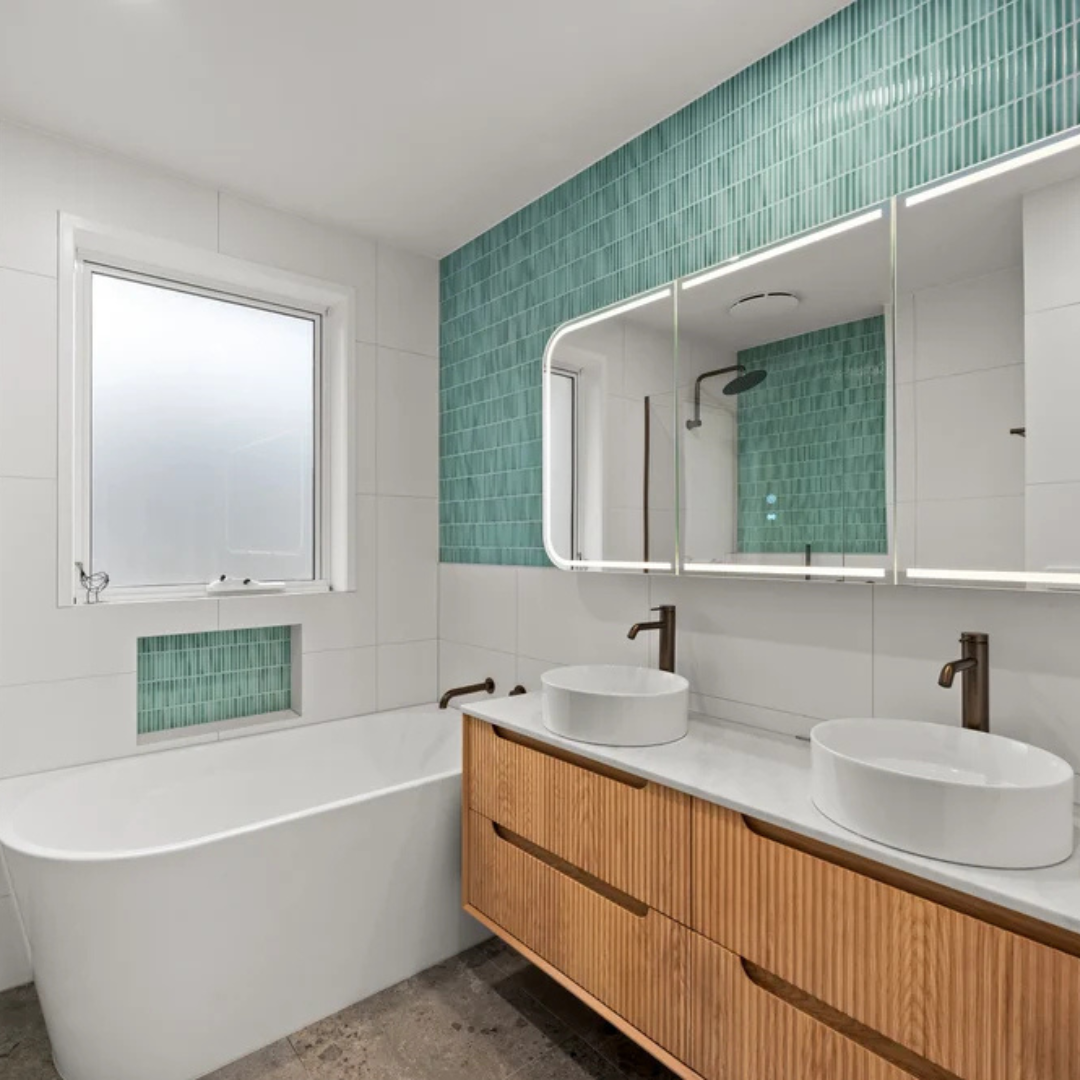
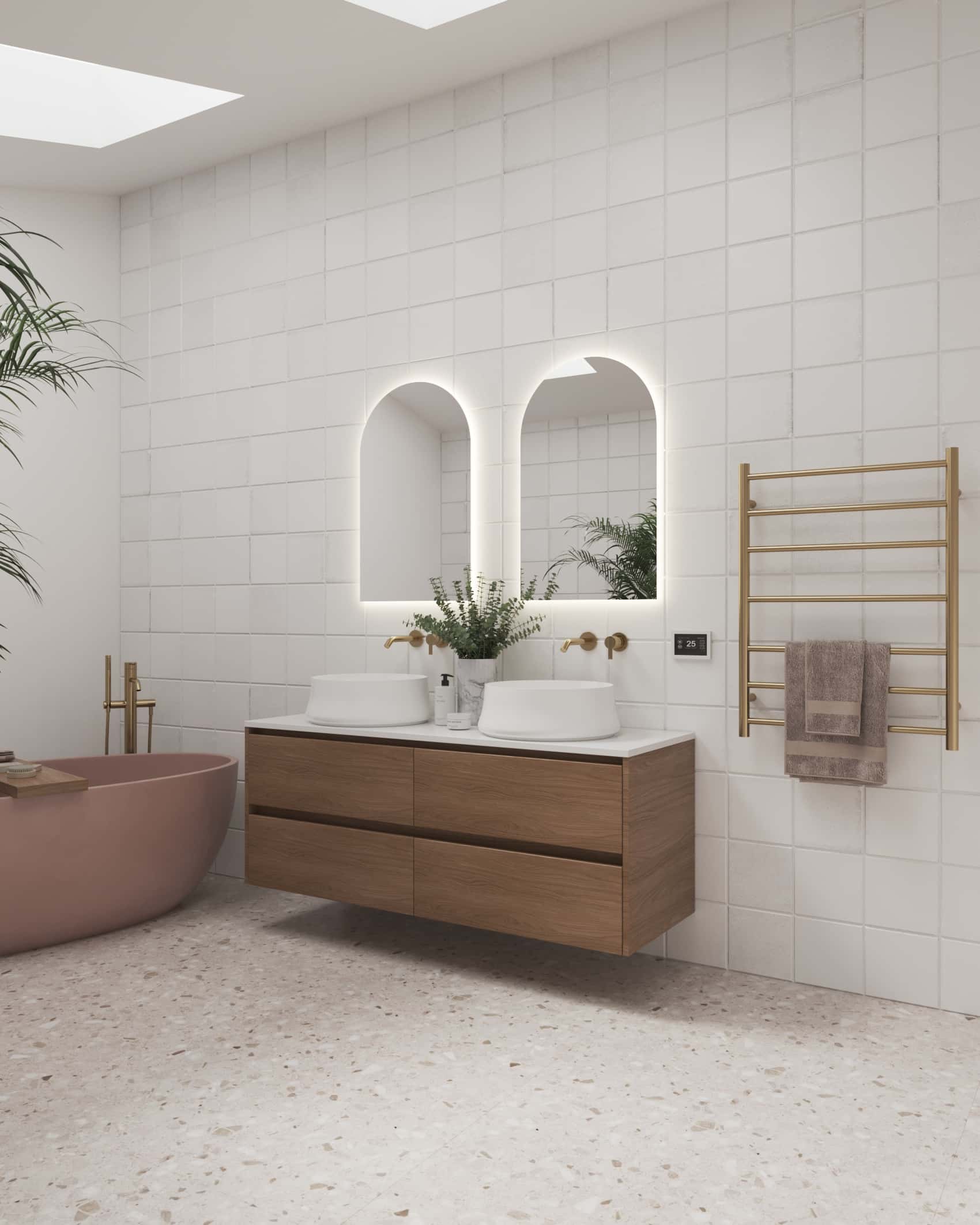
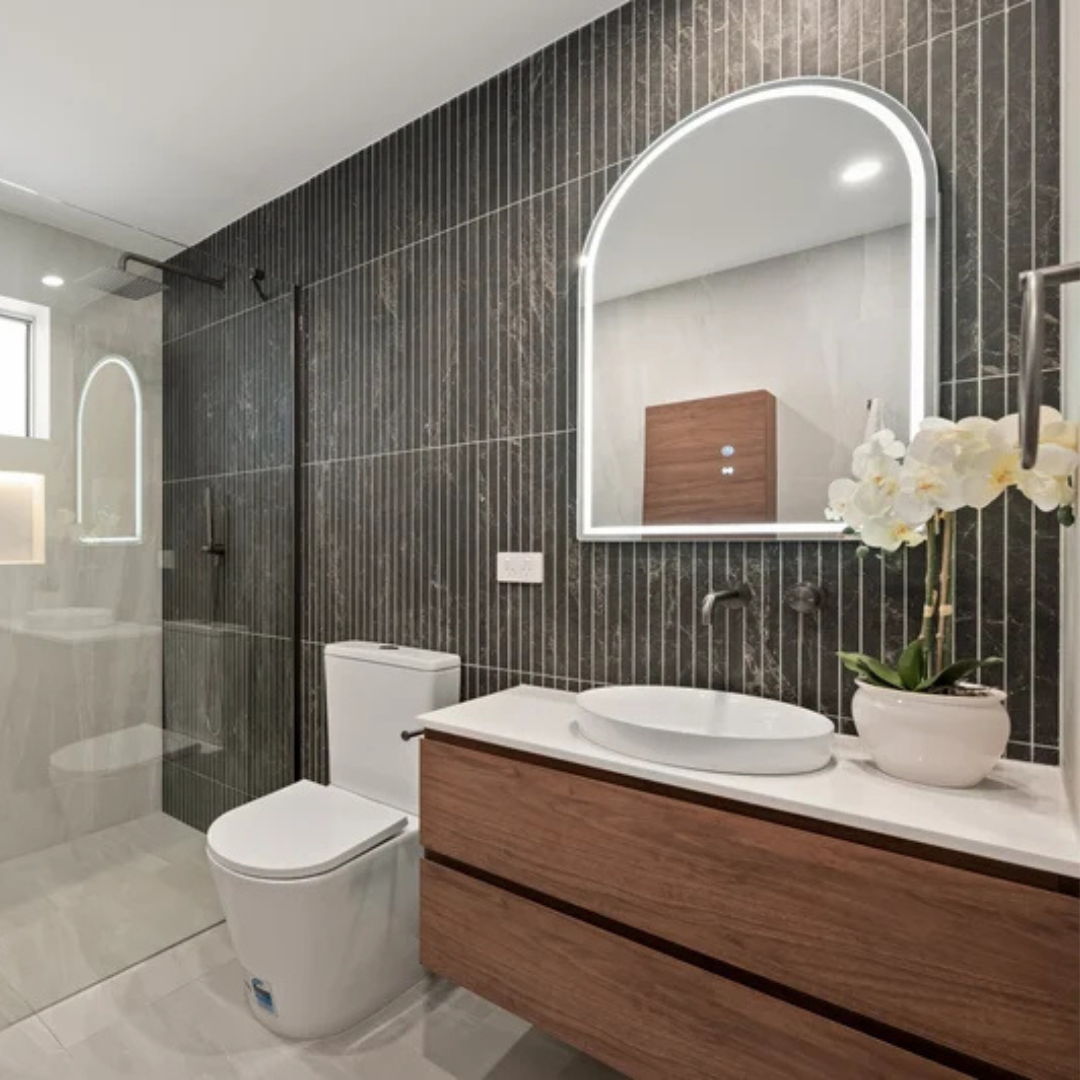
Bathroom lighting needs three layers. Ambient from the ceiling for general use. Task lighting at the vanity, usually either sconces either side of the mirror or an LED backlit mirror. Accent lighting for mood, often niche lighting or feature lighting over a bath. Our mirror collection and shaving cabinet collection include backlit and lit LED models that solve the vanity lighting problem at the source.
Mistake 10, Framed shower screen in a small bathroom
A homeowner in Thornbury chose a chrome framed shower screen because it was $500 cheaper than frameless. In their small 2.4 by 2.0 metre bathroom, the frame visually divided the room into two cramped halves. The bathroom felt tiny. Five years later they replaced the screen with frameless at a cost of $1,900.
Frameless shower screens maximise visual space in small bathrooms and read as a single open area rather than two divided ones. The glass itself is the design feature. In larger bathrooms, framed screens are a design choice rather than a visual constraint. In the typical Melbourne main bathroom under 10 square metres, frameless is almost always worth the extra. See the shower screens collection for current ranges.
Mistake 11, Choosing style over function on tapware
A couple in South Yarra chose a sleek wall mounted tap over the vanity for the minimalist look. On installation they discovered the water flow angle sent most of the water either over the back of the basin into the wall or directly down the drain without hitting their hands. Daily use was frustrating. The replacement to a different style tap cost $900 including the plumber's time.
Tapware should be chosen for function first, then style. Wall mounted taps need the correct projection to match the depth of your basin, usually 180 to 220 millimetres for a semi inset or above counter basin, less for a drop in basin. Mixer type matters. A single lever mixer is practical for everyday use. Spin ceramic disc cartridges are the modern default. See the tapware collection for Melbourne compliant options from the brands we stock.
Mistake 12, No written contract or verbal quote only
A couple in Essendon agreed to a bathroom renovation on a handshake and a verbal $18,000 quote. The job started 3 weeks late. Mid way through, the renovator asked for an extra $7,000 for unforeseen plumbing. The couple refused. The renovator abandoned the job half done. With no written contract, Domestic Building Insurance did not apply. The couple had to pay another builder $11,000 to finish and remediate the work.
Victorian consumer protection law requires written contracts for domestic building work over $10,000. For contracts over $16,000, DBI must be provided. Deposits are capped at 5 percent for contracts over $20,000. Never agree to a verbal quote on a bathroom renovation. See our post on 10 questions to ask your renovation contractor before you sign anything for the full list of contractual protections.
Mistake 13, Not planning for aging in place
A couple in Templestowe did a beautiful bathroom renovation in their forever home at 55. By 70, the raised shower hob was a trip hazard. The bath was impossible to climb into comfortably. The small vanity knobs were hard to grip. They renovated again at 72, this time with a hobless shower, grab rails, lever handles and a seated vanity position, at a cost of $38,000.
If your renovation is in your forever home, think about how the space will work in 15 to 25 years. A hobless walk in shower is now a mainstream design choice, not an accessibility compromise. Grab rails can be installed inside structural wall framing even if not immediately needed, so they can be added later without major work. Lever tap handles are easier to use than knobs for anyone with reduced grip strength. Seated vanity options are both luxurious now and practical later. A little future proofing at renovation time saves a second renovation a decade or two later.
Mistake 14, No power points at the vanity
A homeowner in Northcote planned a minimalist bathroom with no visible power points at the vanity. On the first morning after moving back in, she tried to use her hairdryer and could not find a plug. She was running an extension cord from the hallway for the first 3 months until she had an electrician back to install compliant IP rated power points at the vanity. The retrospective work cost $600 and required a small amount of damage to new tiles to run the cable.
Modern bathroom vanities almost always need power. Hair dryers, straighteners, electric toothbrushes, electric razors, lit mirrors, demisters, and sometimes bidet seats all need power at the vanity. Plan for 2 to 4 power points at the vanity, correctly zoned under the wiring rules, with the electrician's Certificate of Electrical Safety covering everything. If you want a demister on your mirror, this is wired at rough in stage, which is why selections matter. Our shaving cabinet collection includes models with integrated power points inside the cabinet, which keep devices charged and out of sight.
A simple pre renovation sanity check
Before you sign a bathroom renovation contract, these 10 checks catch most of the mistakes above.
- Written fixed price contract, with scope, timeline, warranty and DBI if over $16,000
- Deposit no more than 5 percent on contracts over $20,000
- VBA registration of the builder, verified on the public register
- All selections confirmed in writing before contract signing, with lead times stated
- Door, drawer and shower screen swing clearance checked at concept stage
- Ventilation specified, with a quality exhaust fan ducted to outside
- Vanity size matched to the number of users in the household
- Lighting plan with ambient, task and accent layers
- Grout colour and sealing plan decided
- Power point locations at the vanity, correctly zoned
Melbourne home type context, where these mistakes hit hardest
Edwardian and Victorian terraces
Small original bathrooms, often added as a lean to at the back of the house in later decades. Common mistakes are trying to fit too much into too little space, missing waterproofing on original subfloor timbers, and choosing a layout that does not account for the drainage path to the sewer. A well designed small bathroom with a hobless shower, double basin vanity and good storage can feel much larger than its footprint suggests.
Californian bungalows and Edwardian weatherboards
Mid sized bathrooms often with original features worth retaining. Common mistakes are ripping out everything in the name of a fresh start when a restored clawfoot bath or an original window would have anchored the design beautifully. Heritage style tapware from the ADP and Bella Vista ranges often works beautifully in this style of home.
1960s and 1970s brick veneers
Larger bathrooms that often need a complete layout rework. Common mistakes are keeping the original layout for cost reasons when a new layout would work much better. The 1960s plumbing is almost always ready for replacement anyway, so you may as well rework the layout at the same time.
Apartments and townhouses
Tightly constrained spaces with strict owners corporation rules. Common mistakes are starting work without OC approval, choosing fixtures without checking they fit the available footprint, and underestimating the project timeline because of OC working hours restrictions. Our post on how long a bathroom renovation takes covers these constraints.
How Apadana works to prevent these mistakes
Every one of the 14 mistakes above is avoidable with the right planning. On our 7 step renovation process, step 1 and 2 cover site inspection and preliminary design, where layout, door clearances, ventilation, lighting and electrical plans are all developed. Step 3 is the showroom selection meeting at our Nunawading showroom, where you see and touch the actual fixtures before you commit. Step 4 is the contract signing with full written scope, DBI, and all compliance obligations clearly set out. Steps 5, 6 and 7 take the project through to handover, with the full paperwork pack including all compliance certificates.
Our completed bathroom projects in Clifton Hill, Beaconsfield and Fitzroy North all show the result of this process. If you want to see examples before you commit, book a showroom visit through our contact page, or browse our bathroom renovation service page for an overview of what we deliver.
Related reading
The complete guide to bathroom renovations in Melbourne covers the full project view. For design inspiration, see luxury modern bathroom design, hotel style bathroom design, soft contemporary bathroom design, and the terrazzo bathroom guide. For specific product decisions, our posts on shaving cabinet vs mirror cabinet and how to choose a toilet suite cover the specifics in depth.