
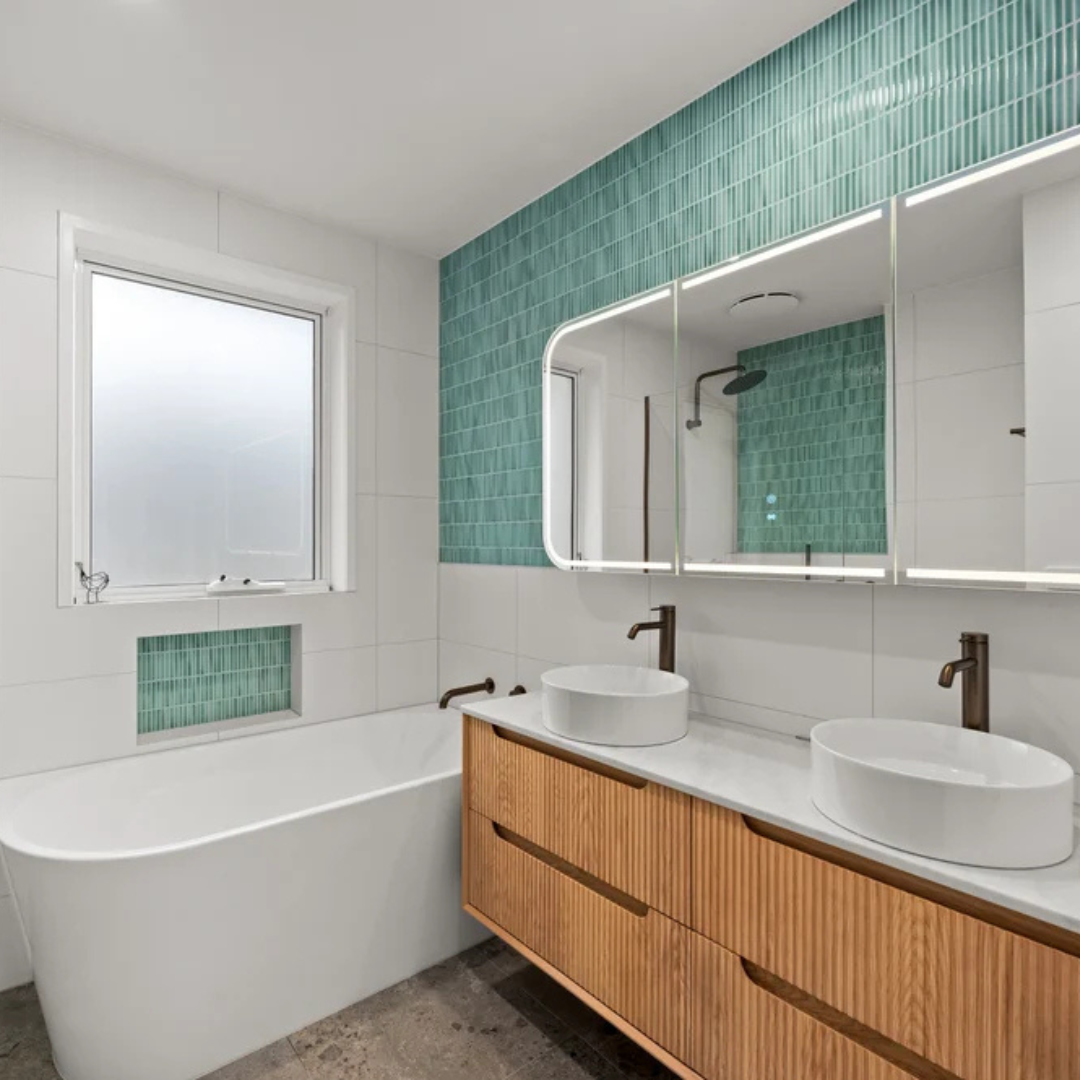
Bathroom renovations have more compliance paperwork than any other room in a Melbourne home. Waterproofing, plumbing certificates, electrical safety, WaterMark fittings and sometimes building permits all come into play. The good news is that most of this is handled by your renovator and your trades. The bad news is that if any of it is missed, the consequences range from a failed shower that leaks into the room below to a denied insurance claim or a stalled property sale.
This guide walks through every piece of compliance paperwork that applies to a Melbourne bathroom renovation. If you understand the system, you can confirm your renovator is doing it right, you can check their quote is complete, and you can hold on to the paperwork at the end for insurance and resale.
This is the bathroom companion to our kitchen permits guide. If you are planning both at once, see our post on does renovating kitchen and bathroom together add more value. For a broader bathroom view, our complete guide to bathroom renovations in Melbourne covers planning, cost, and design.
As with the kitchen guide, this is general information for Melbourne homeowners, not legal or regulatory advice. Rules change, councils interpret things differently, and every bathroom is different. Always confirm with a registered building practitioner or your local council.
Who regulates bathroom renovations in Victoria
The same four regulators as kitchens. The Victorian Building Authority, which becomes the Building and Plumbing Commission from 1 July 2026. Energy Safe Victoria for electrical work. Your local council for planning permits where needed. A private building surveyor if a building permit is needed.
Bathrooms add a few extra players. WaterMark is the certification scheme for plumbing products, administered under the Plumbing Code of Australia. Standards Australia publishes AS 3740:2021, the waterproofing standard that every Victorian bathroom must comply with. These standards are mandatory, not optional.
When your bathroom renovation needs a building permit
Like kitchens, most bathroom renovations in Melbourne do not need a building permit if the layout stays the same and you are doing a like for like replacement. Permits become necessary in these scenarios.
Moving walls or changing the room's footprint
Taking down an internal wall to make the bathroom bigger, taking space from a bedroom or hallway to extend the bathroom, or reconfiguring the bathroom and ensuite as one combined space usually needs a building permit. If the wall is load bearing, a structural engineer and building surveyor are both involved.
Adding a bathroom where there was not one
Converting a storage space, a laundry, or a bedroom corner into a new ensuite or powder room is new building work and typically needs a building permit. The plumbing drainage path to the sewer is often the biggest technical challenge, and the building surveyor will want to see how it has been designed.
Significant waterproofing in a new area
New wet area construction where none existed before, particularly on a timber subfloor, triggers both building permit requirements and strict waterproofing compliance under AS 3740:2021.
Heritage overlays
If your home is in a Heritage Overlay, external changes trigger planning permits. For internal bathrooms, planning permits are rarely triggered unless you are adding a window or vent to an external wall.
Owners corporation approvals in apartments
Apartment bathroom renovations almost always need owners corporation approval, which is separate from any building permit. The OC may require specific trades, specific waterproofing systems, hours of work, and copies of all compliance certificates. Common property is often involved because the drainage pipes serve multiple apartments.
Waterproofing, the single most important compliance item
Waterproofing is the number one source of defects, insurance claims and VCAT disputes in Victorian bathroom renovations. The standard that governs it is AS 3740:2021, Waterproofing of Domestic Wet Areas. It specifies what must be waterproofed, how high the membrane must go, what certifications the installer must hold, and what documentation must be provided.
What AS 3740:2021 requires
The standard requires full waterproofing of the shower area, including the floor and walls to a specific height. In Victoria, the floor of the whole wet area, meaning the whole bathroom, must usually be waterproofed. Walls behind baths and vanities need waterproofing. Window reveals in shower zones need waterproofing. Where water can run or splash, waterproofing applies.
Specific wall heights the standard requires. In a shower enclosure, waterproofing must run to a minimum of 1800 millimetres on all shower walls. In a step down shower, the hobless type, waterproofing extends further to prevent water escaping across the floor. Behind a bath, waterproofing runs to 150 millimetres above the finished bath height. Behind basins, waterproofing extends to 150 millimetres above the basin.
Who can install the waterproofing
In Victoria, waterproofing of domestic wet areas must be done by a licensed plumber endorsed in waterproofing, or a licensed waterproofer registered with the VBA. Carpenters and tilers are not legally permitted to carry out the waterproofing of your bathroom unless they also hold the specific endorsement. This is a common area where unregistered trades slip in, and it is where defects most often appear.
Membrane types
Several membrane systems are approved under AS 3740:2021. Liquid applied membranes, usually brushed or rolled on, are the most common for domestic bathrooms. Sheet membranes, bonded to the substrate, are often used in commercial and premium domestic work. Some premium systems come with 25 year warranties, which is why reputable renovators specify these on larger jobs.
Documentation
Your renovator should provide you with a Waterproofing Compliance Certificate at handover. This document names the product used, the installer, the areas covered, and the date of installation. Keep this with your renovation paperwork. If a leak later develops and you need to claim on insurance, this document is the first thing the insurer will ask for.
Our post on waterproofing in a bathroom renovation and why it matters in Melbourne goes into detail on membrane types, failure modes, and what to look for during the installation stage.
Plumbing compliance certificates
Every plumbing job in Victoria over $750 in value requires a Compliance Certificate from the licensed plumber. For a bathroom renovation, this covers the installation of pipes, drains, taps, mixers, toilets, shower outlets, vanity waste, bath waste, and any related work.
The certificate is lodged with the VBA within 10 business days of completion and a copy must be provided to you as the homeowner. It is proof that the work meets the Plumbing Code of Australia. If a plumbing issue later arises, the certificate links to the plumber's warranty obligations and insurance.
WaterMark certification
All plumbing products installed in Victoria must carry WaterMark or StandardsMark certification. This includes taps, mixers, shower heads, toilet cisterns, shower outlets, basin wastes and bath wastes. WaterMark confirms the product has been tested and meets Australian plumbing standards. Products bought from overseas websites, including Alibaba, eBay, and some direct from China retailers, often do not carry WaterMark and are illegal to install in a Victorian bathroom.
The brands we stock at Apadana, including Bella Vista, ADP, Johnson Suisse, Thermogroup, Otti and Timberline, all carry WaterMark certification. The tapware in our tapware collection, the toilets in our toilet collection and the vanities in our vanity collection are all legal to install anywhere in Victoria. If you are buying your own tapware before you talk to a renovator, check the WaterMark logo on the box or product listing.
WELS rating
WELS stands for Water Efficiency Labelling and Standards. It is a separate rating scheme that measures water consumption of taps, toilets, showers, dishwashers and washing machines. The star rating is mandatory to display on products sold in Australia. Higher star ratings mean lower water use. For a Melbourne bathroom, a 4 or 5 star showerhead can cut water use significantly compared to older unrated models.
Electrical work in a bathroom
Electrical work in a bathroom is tightly regulated because of the risk of electrocution in a wet area. All electrical work must be done by a licensed electrician registered with Energy Safe Victoria. The electrician must issue a Certificate of Electrical Safety for all prescribed electrical work.
Zones in a wet area
The wiring rules divide a bathroom into zones based on distance from the bath, shower and basin. Different zones permit different types of electrical fittings. Zone 0, inside a bath or shower, allows only extra low voltage fittings. Zone 1, directly above the bath or shower, requires IP67 rated fittings. Zone 2, within 60 centimetres of the bath or shower, requires IP44 rated fittings and residual current protection. Beyond Zone 2, normal domestic fittings can be used, still with required residual current protection.
These zones affect where you can place lights, exhaust fans, heated towel rails, LED mirrors, shaver sockets and heated flooring controls. A reputable electrician will know these rules by heart. If an electrician cannot explain the zones for your bathroom, use someone else.
Common bathroom electrical items
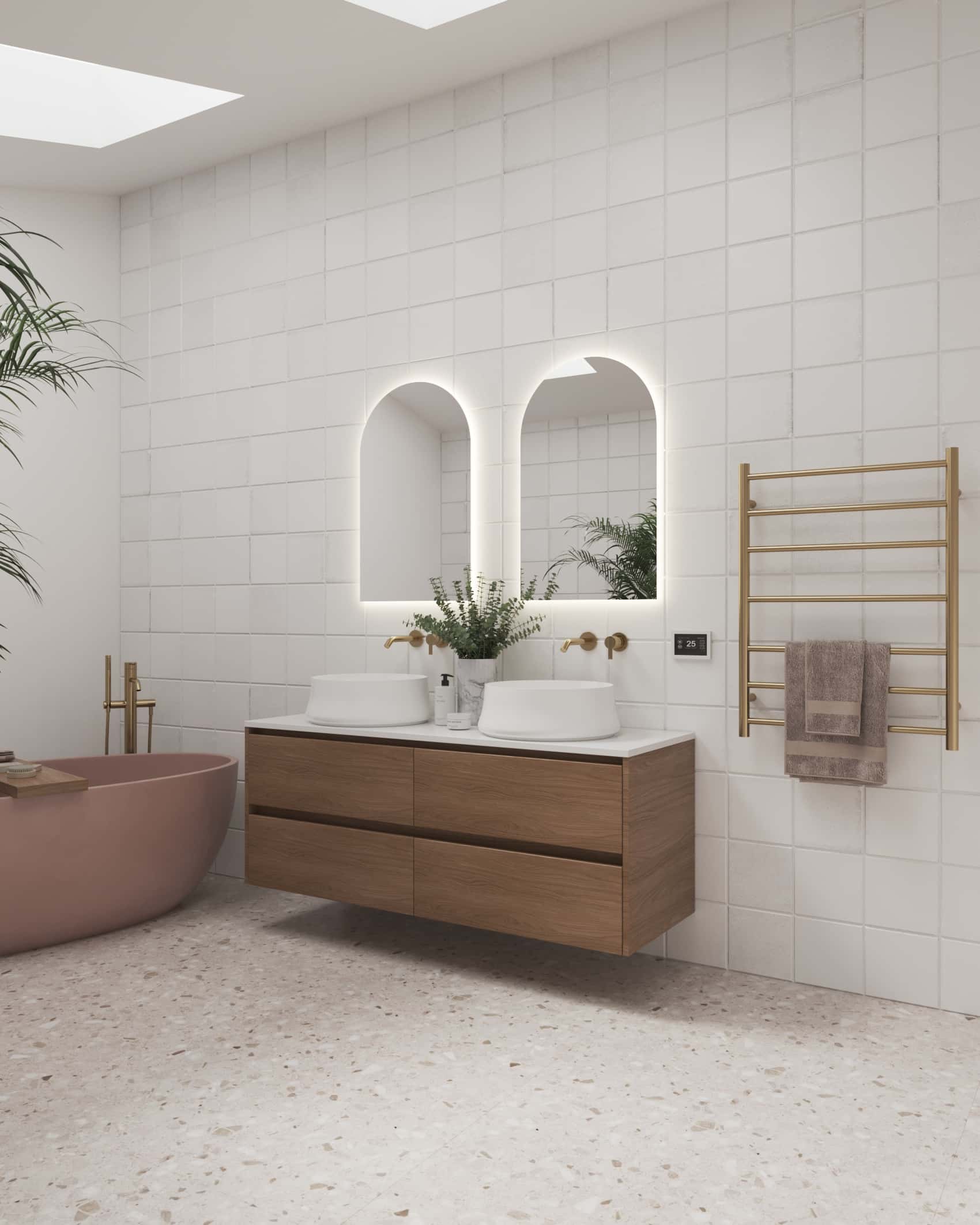
Items that need the electrician's attention include exhaust fans, downlights, mirror lights, LED backlit mirrors from our mirror collection and shaving cabinet collection, heated towel rails from our Thermogroup range, underfloor heating from our heating collection, and any power points above vanities. Each of these needs correct zoning, correct IP rating, and correct wiring. All work is covered by the Certificate of Electrical Safety.
Stage by stage, a typical Melbourne bathroom renovation timeline
A straightforward bathroom renovation in Melbourne takes 3 to 4 weeks on site, as noted on our bathroom service page. Here is how the compliance items sit within that timeline.
|
Week |
Work |
Compliance paperwork |
|---|---|---|
|
Week 1 |
Demolition, strip out, rough plumbing and electrical |
Trade licensing verified, work begins under supervision |
|
Week 2 |
Framing adjustments if any, waterproofing membrane install and cure |
Waterproofing Compliance Certificate started, inspection by building surveyor if required |
|
Week 3 |
Tiling, cabinetry install, plumbing fit off, electrical fit off |
Mid stage inspection if under building permit |
|
Week 4 |
Final fixtures, cleaning, snag list, handover |
Plumbing Compliance Certificate, Certificate of Electrical Safety, Waterproofing Certificate issued |
Our post on how long a bathroom renovation takes, a realistic Melbourne timeline covers week by week realities in more detail.
Contracts, DBI, and deposits
The same Victorian consumer protection rules that apply to kitchen renovations apply to bathrooms.
Domestic Building Insurance
Required on any domestic building contract over $16,000. For a mid range bathroom renovation, this threshold is easily reached. Check the DBI certificate before paying your deposit.
Deposit cap
Maximum 5 percent on contracts over $20,000. Maximum 10 percent on contracts under $20,000. Anything higher is not legal.
Contract requirements
Victorian domestic building contracts must include the full price, start and finish dates, detailed scope, warranty provisions, and DBI details. Avoid verbal agreements and loose scopes that just say replace bathroom fixtures.
Heritage and apartment specific considerations
Heritage overlay bathrooms
For a bathroom inside a heritage overlay home, the compliance picture is usually straightforward because you are working inside. Planning permits trigger when you change the external appearance. If your bathroom renovation includes replacing a window, adding a new window, cutting a new exhaust vent through an external wall, or changing anything visible from outside, a planning permit is needed.
Common Melbourne heritage overlay councils include Boroondara, Yarra, Stonnington, Port Phillip, Melbourne and Moonee Valley. Each has slightly different timelines, usually 4 to 8 weeks for an internal only approval, 8 to 12 weeks for external changes.
Apartment and townhouse bathrooms
Apartment bathroom renovations have the extra layer of owners corporation approval. The OC manages common property, which includes drainage pipes shared with other apartments, external walls, and the roof. Any work that affects common property needs OC approval.
The OC may also require specific trades, specific insurance from those trades, hours of work, parking arrangements, waste disposal plans, and copies of all compliance paperwork. Starting work without OC approval can result in an immediate stop work order, fines, and in extreme cases, orders to reinstate the bathroom to its original condition.
Always get OC approval in writing before signing a renovation contract. Even if your strata manager tells you it is fine, get it in writing on the OC's letterhead or email with the resolution attached. This protects you if the OC later changes its mind.
The paperwork pack at handover, your checklist
At the end of a compliant Melbourne bathroom renovation, you should receive the following documents. Keep them together in one folder. You may need them for insurance claims, warranty work, or when you sell the property.
- Waterproofing Compliance Certificate, naming the product, installer and date
- Plumbing Compliance Certificate, lodged with VBA by the licensed plumber
- Certificate of Electrical Safety, lodged with ESV by the licensed electrician
- Domestic Building Insurance certificate, if the contract exceeded $16,000
- Certificate of Final Inspection, if the work was under a building permit
- Owners corporation approval letter, if an apartment or strata property
- Product warranties for installed fixtures and fittings
- Builder warranty documentation and after sales contact details
What happens if you skip the compliance
Skipping compliance on a bathroom is more serious than skipping it on a kitchen because of the water involved.
Water damage insurance claims
If a shower leaks into the room below and damages ceilings, floors or electrical, your insurance claim can be denied without a Waterproofing Compliance Certificate. Insurers increasingly ask for this document on bathroom related claims.
VCAT disputes
The Victorian Civil and Administrative Tribunal handles disputes between homeowners and builders. Bathroom waterproofing failures are among the most common cases. Without compliance paperwork, your position is weaker. With paperwork, you have a strong case for defect rectification.
Section 32 and resale
The Section 32 Vendor Statement discloses any building work done without permits. Buyers' solicitors routinely ask about compliance certificates for bathrooms. Without them, buyers can demand retrospective inspections, price reductions, or walk away.
Health and safety
Unauthorised electrical work in a bathroom can cause electrocution. Leaks can cause mould, structural rot, and in extreme cases subfloor collapse. These are not theoretical, they happen every year in Melbourne homes that skipped compliance.
How Apadana handles bathroom compliance
Every Melbourne bathroom renovation we take on includes full compliance paperwork. Our 7 step process builds compliance into every stage. Site inspection identifies permit triggers. Preliminary quote includes any permit costs separately. Showroom selection meeting confirms WaterMark certified products from our stocked ranges. Contract signing uses a Victorian compliant domestic building contract with DBI where required. The schedule of works includes waterproofing inspection timing. Construction uses only licensed trades. Handover includes the full paperwork pack listed above.
Our showroom at Unit 64, 31 to 37 Norcal Road, Nunawading, has sample fixtures from every brand we stock. You can see the WaterMark certification labels in person, feel the quality of the tapware and vanities, and compare finishes side by side before you commit. Book a visit through our contact page.
Related reading
The complete guide to bathroom renovations in Melbourne covers planning, cost, and design at a higher level. What is waterproofing in a bathroom renovation goes deeper on membrane systems and failure modes. How long does a bathroom renovation take covers the week by week timeline. For design direction, see luxury modern bathroom design guide and how to design a hotel style bathroom. For common pitfalls, see bathroom renovation vs bathroom remodel what is the difference.
Our completed bathroom projects in Clifton Hill, Beaconsfield and Fitzroy North, all delivered with full compliance paperwork, are on the projects page. For specific suburb information or if you want to combine bathroom and kitchen work, our bathroom renovation service page covers how we work across Melbourne.

